
A field report on the 1977–79 disturbances in a council house in Enfield: knocking walls, sliding chairs, a harsh male voice, and the evidence that still resists a tidy ending.
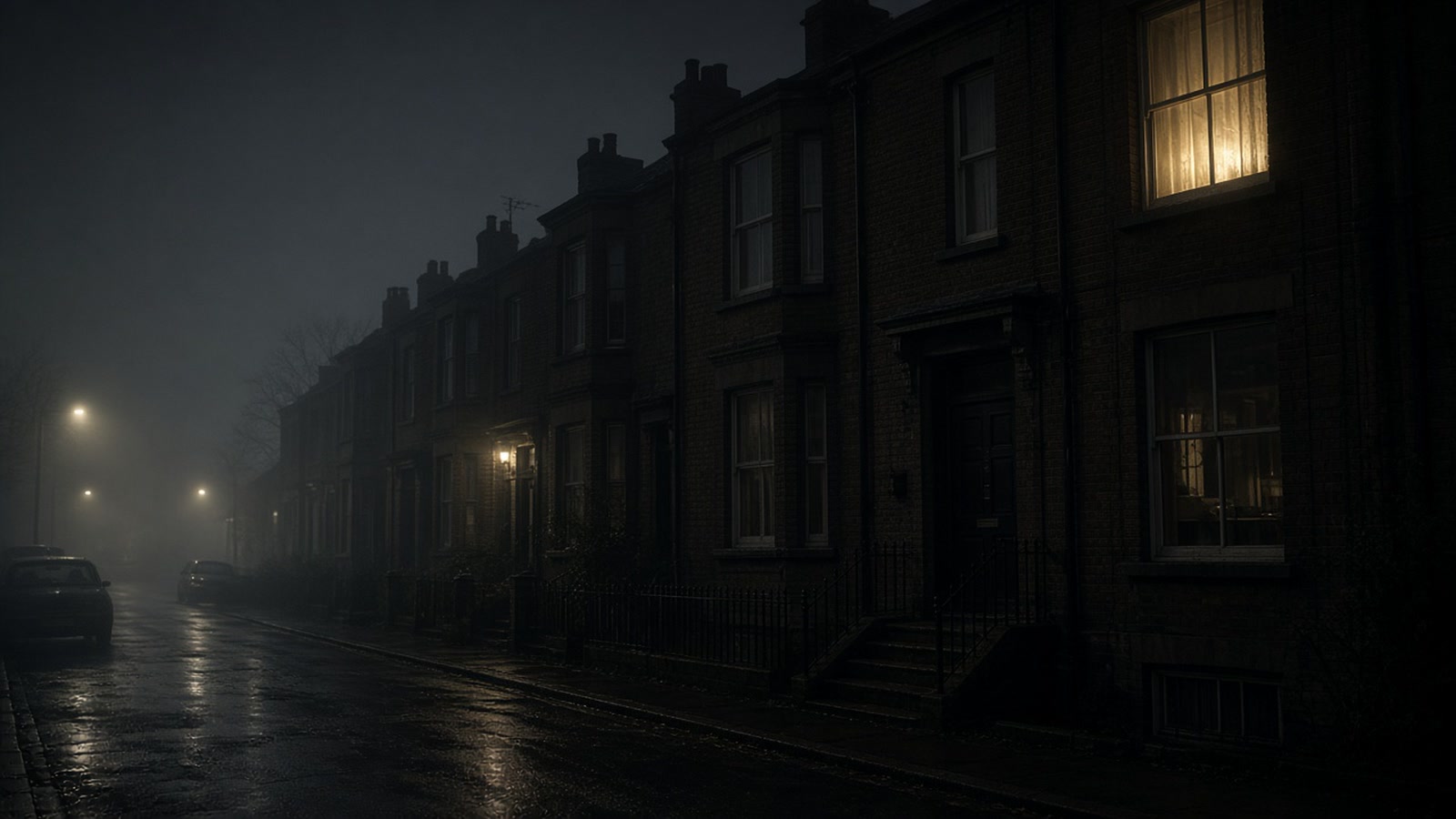
Haunted houses are supposed to look the part. This one did not. Number 284 Green Street, in the north London suburb of Enfield, was an ordinary three-bedroom council semi from the 1920s — brick, net curtains, a front garden like every other house in the row. In late August 1977 it became, for roughly eighteen months, one of the most closely watched poltergeist cases in modern Britain. Police officers stood in the living room. Neighbours heard knocks they could not source. Newspaper photographers caught flying toys. Visiting researchers logged more than a hundred and eighty hours of tape. Something in that house refused to behave, and nearly half a century later the file still does not close cleanly.
An Ordinary House on an Ordinary Street
Enfield sits north of the River Lea, a working suburb rather than a gothic ruin. The house at the centre of the case was rented, modest, and already carrying the ordinary stresses of a single-parent family with four children. There was no local legend attached to the address beforehand, no cemetery under the floorboards, no Victorian murder story waiting in the archives. That absence matters. When phenomena erupt in a place that was never marketed as haunted, expectation is a weaker explanation than it is in a tourist castle.
The first reported night falls at the end of August 1977. Two of the children heard shuffling and knocking in their bedroom. Their mother entered. All three heard further knocks. A chest of drawers shifted across the floor without anyone touching it — about eighteen inches, by the family’s account. They went next door. The neighbours came in, heard knocks that seemed to follow them from room to room, and could find no pipe, loft or street noise to blame. The police were called.
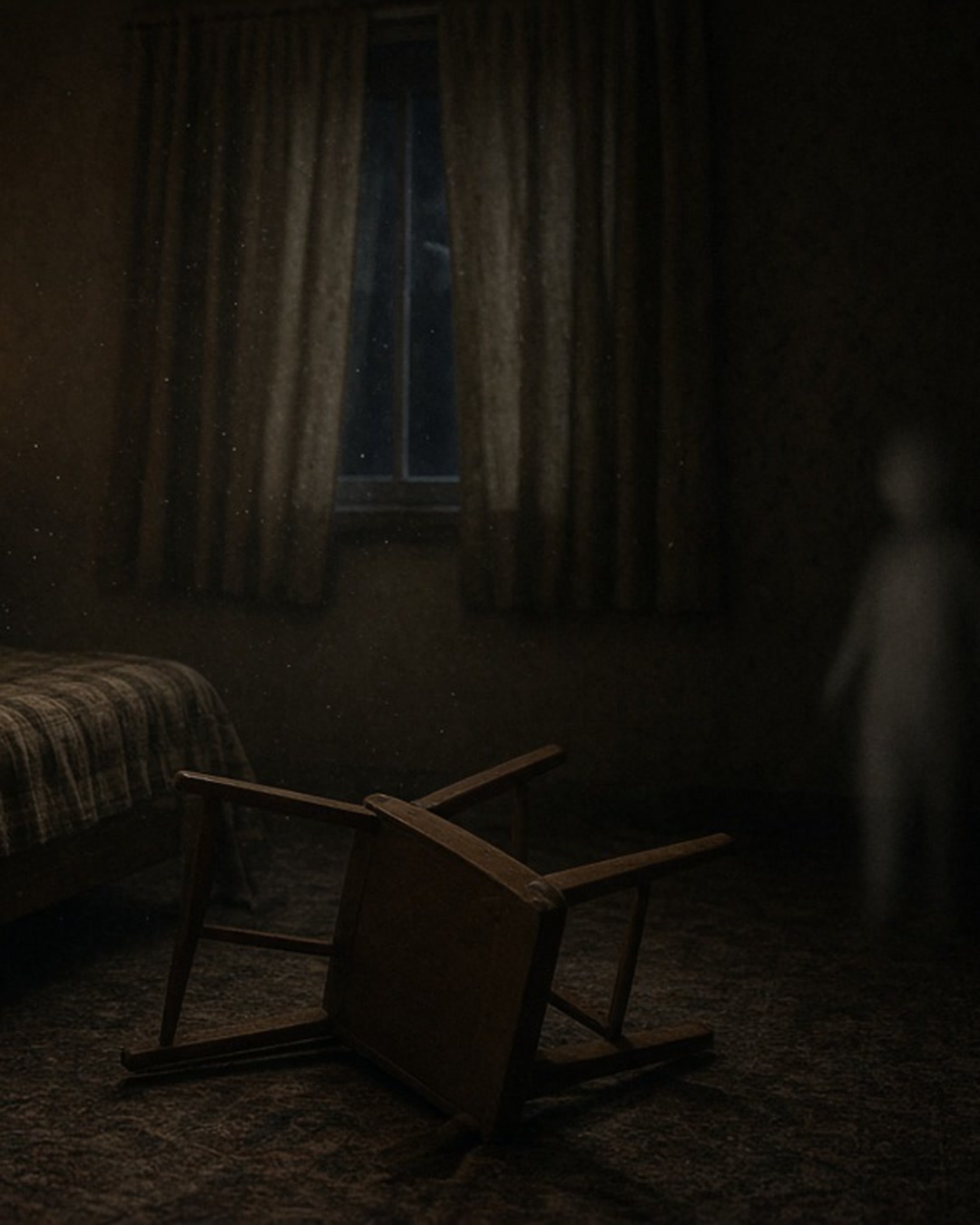
A female police constable later wrote that she heard distinctive peals of four taps, first on one wall and then on another, after lights were switched off. While other officers and neighbours checked the kitchen, she watched a chair beside the sofa wobble, then slide three to four feet across the living-room floor without leaving the carpet. She inspected the chair. She could find nothing to explain the movement. That statement — from a serving officer with no paranormal brief — is one of the reasons Enfield still sits in investigators’ case files rather than only in folklore blogs.
What People Said They Saw
Over the following days and months the reports multiplied. What follows is drawn from contemporary witness accounts, investigators’ notes and later case summaries. Treat it as testimony that has to be weighed, not as a verdict.
Flying toys and dead landings. Marbles and plastic building bricks were said to travel through the air at speed. A newspaper photographer on an early visit reported being struck on the forehead by a brick travelling hard enough to leave a bruise. More than one witness described marbles that appeared suddenly and dropped dead at their feet — no bounce, no roll — which is not how a marble behaves when a child throws it.
Doors, drawers and furniture. Toilet doors opened and closed with nobody near them. Kitchen unit doors slid. Drawers opened. A settee was reported levitated and overturned in front of several people. Tubular door chimes swung when the house was still. A framed certificate came off a wall while a researcher was alone in the room. A bedroom carpet was repeatedly pulled up at the edge into the same shape, an effect the same researcher said he could not reproduce by ordinary means.
The fireplace frame. One of the most cited physical events: the iron frame of a built-in fireplace was wrenched from the wall. A later review committee from a psychical research society singled that incident out as poltergeist activity of the first order. Fireplace iron does not casually leave its setting during a children’s game.
Apparent levitation. The younger daughter at the centre of the case was repeatedly reported lifted and deposited elsewhere in the room. An independent street witness — a council crossing attendant walking past the house — later described seeing the girl rise bodily to window height in a horizontal position, as if tossed by something holding her legs and back, with a companion confirming the same sight. Jumping from a bed does not look like that from the pavement.
Knockings, small fires, failed equipment. Knocks and bangs without plumbing sources. Footsteps with nobody present. Coins vanishing and reappearing. Matches and small fires that started and extinguished themselves without damage. Water appearing where nobody could account for it. Recording gear and cameras that failed when they were most needed.
The voice. From December 1977 a harsh, guttural male voice began to speak through the younger daughter — and later, more weakly, through her sister. It was nothing like a child’s ordinary speech. It swore. It claimed to be an elderly man who had lived in the house, gone blind, suffered a haemorrhage, and died in a downstairs chair. A previous occupant of that description had in fact died in the house; the children were not known to have been told the details. Investigators taped the girl’s mouth and later filled it with water; the voice continued, subdued. Hours of recordings survive. Speech specialists and physicists offered theories about false vocal-cord tones and diaphragmatic tricks. The side-effects those conditions usually produce — weeks of hoarseness, a sore throat — were not reported. One lead investigator publicly offered money to charity if any child could replicate the voice under controlled terms. Nobody took him up on it.
Who Came to Look
The family’s first helpers were neighbours and the police. Then council officials and clergy. Then the press, after a neighbour telephoned a national newspaper hoping someone could help. Photographers and reporters entered the house in early September 1977 and witnessed flying objects for themselves.
A psychical research society was contacted. An inventor-turned-investigator arrived on 5 September, advised calm note-taking, and after further visits — including a loud crash witnessed with reporters present — committed to the case. A second researcher, a writer with field experience, joined a week later. Together they made roughly one hundred and eighty visits and twenty-five all-night vigils over more than a year. Their method was stubborn rather than theatrical: sit, watch, record, write everything down, bring in specialists when an effect outran their expertise.
Others came through: physicists with weight-measurement couches and laryngographs; a visiting researcher who reported being struck by a flying plate and having his hair pulled while sleeping on the floor; psychiatrists who examined the girls and found no epilepsy, no brain damage, no neat clinical label that dissolved the case. Mediums visited and sometimes seemed to quiet the house for a short stretch. National press teams brought magicians hoping to catch a fraud. The phenomena did not politely stop for any of them.
In May 1978 the same psychical research society convened a review committee. After interviewing many witnesses, the committee judged that there was good evidence for paranormal events described by credible informants, while reserving judgement on poorly observed incidents and remaining wary of the voice. One committee member wrote that she was personally satisfied paranormal events had occurred at Enfield.
What Remains Unexplained
Every famous case attracts its debunkers, and Enfield is no exception. The two girls at the centre later said they had faked a small fraction of incidents — roughly two percent, in one later interview — and the lead investigators themselves caught and recorded those attempts. Children under months of attention will copy what they see. That admission is often waved as if it settled the whole file. It does not.
It does not explain a police constable watching a chair slide across a living room. It does not explain a street witness describing horizontal levitation at a first-floor window. It does not explain a fireplace iron torn from a wall, marbles that land without bouncing, or a gruff male voice that kept speaking with a mouth taped shut and full of water. It does not explain why dozens of people unconnected to the family — neighbours, tradesmen, a solicitor, journalists, researchers — signed statements about things they said they saw with their own eyes.
Sceptical readings exist, and they deserve a brief hearing: that some photographs show jumping rather than floating; that the voice could be an unusual but natural vocal trick; that the house became a stage once the press arrived. Those readings account for parts of the theatre. They have never accounted for the whole play. The review committee that looked hardest at the testimony did not close the case as a hoax. The mother never withdrew her account. The daughters, decades on, have continued to insist that most of what happened was real, and that the fear — a curtain winding round a neck, a body lifted without warning — was not a game.
So the heart of Enfield is not a solved trick. It is a residue. Furniture moved in front of people who had every reason to find a hand on it and did not. A voice answered questions with biographical details about a dead former resident. A built-in fireplace came away from the wall. And when the disturbances finally thinned out toward 1979, they left behind tapes, statements and photographs that still do not add up to a single ordinary cause.
Lessons for Investigators
Enfield remains a working manual for anyone who walks into a reported poltergeist house.
- Get the ordinary authorities in first. Police and neighbours who arrive before the paranormal circus still carry the most weight later.
- Write everything down the same night. Memory edits itself; notebooks and tapes do not.
- Separate early testimony from later retellings. Note the date the press arrives, because publicity changes a house.
- Expect some fakery around children and cameras — and log it honestly when you catch it. Admitting the two percent is how you defend the ninety-eight.
- Bring specialists for the stubborn effects. Voices need speech analysis; weight anomalies need proper instruments; torn fixtures need photographs in situ.
- Collect witnesses from outside the family. A crossing attendant, a tradesman, a police officer — people with nothing to sell — are the backbone of a case file.
- Protect the people in the house. The Enfield children were bullied at school for years. Investigation is not entertainment.
- Leave the unexplained unexplained. Forcing a neat ending onto stubborn evidence is how good cases get ruined in the write-up.
A File Still Open
By the end of the 1970s the knocks and the voice had largely gone. The family stayed on. Later occupants of the same house spoke of an uncomfortable watched feeling and of voices downstairs at night, then moved out within months. The mother who lived through the worst of it never changed her story. The researchers who sat through those all-night vigils defended the core of the case for the rest of their lives.
Walk past Green Street today and you will see what you always saw: brick semis, parked cars, a London suburb getting on with itself. Nothing in the architecture announces what was reported inside number 284 between 1977 and 1979. That is part of why the case still unsettles. It did not need a ruined abbey. It needed a council house, a frightened family, and a sequence of events that trained observers could not make behave.
What moved the chair while a police officer watched? What tore the fireplace from the wall? Whose voice answered from a child’s throat with a dead man’s biography? The tapes are still there. The statements are still there. The answers are not. The Enfield file remains open, and an honest investigator leaves it that way.
Leave a Reply