
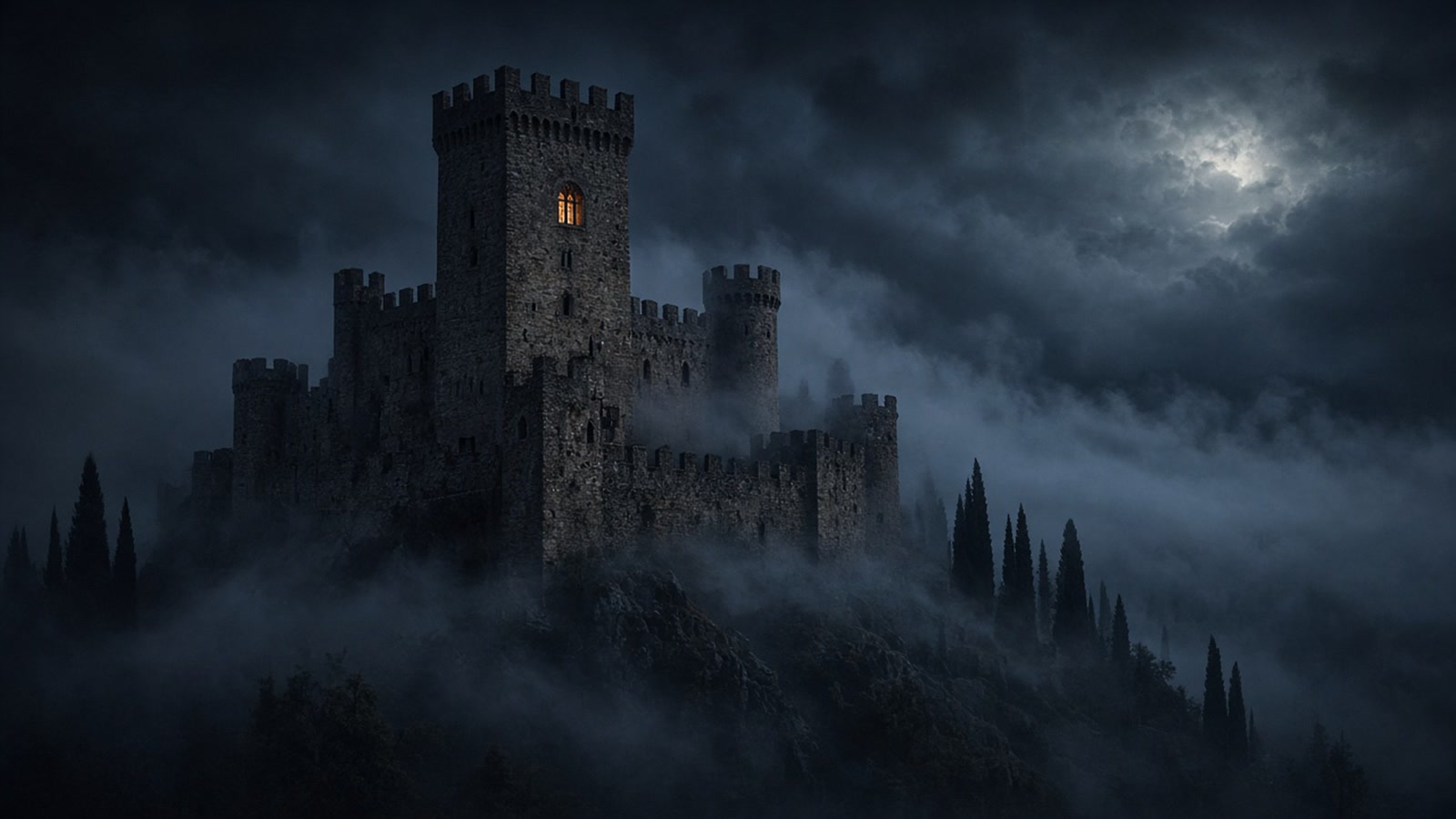
Eight Italian castles that still take overnight guests, and the ghosts said to walk their corridors after the gates close.
Most haunted castles send you home at closing time. You hear the legend from a guide, and by dusk you are back in the car. The castles in this guide are different. Each still opens its doors to overnight guests, in hotel rooms, tower suites or simple rooms under frescoed ceilings, and each carries a ghost story told for generations. From the Dolomites to the hills above the Adriatic, here is where you can sleep inside the legend.
Castel Pergine, Trentino
Where: On a wooded hill above Pergine Valsugana, a short drive east of Trento, looking over Lake Caldonazzo and the Brenta Dolomites.
The legend: Castel Pergine has its own White Lady. Local tradition says she was the wife of a cruel lord who kept her locked away, allowed only brief walks in the courtyard under guard. One night of full moon, dressed in white with her long hair loose, she threw herself from a window to escape. Since then, on full-moon nights, people in Pergine speak of a distant song drifting from the castle and a pale figure moving from room to room, looking out from the highest window. The Fireplace Hall is the room most closely tied to her story. She is remembered as a sad but peaceful spirit, a gentler cousin of the weeping woman of Latin American folklore.
The stay: The castle is a hotel with historic frescoed rooms in the Clesiana Wing, modern rooms opening onto the garden, and suites inside three medieval towers.
Travel notes: Pergine has a station on the Valsugana railway from Trento; Verona and Venice have the nearest airports. The castle’s restaurant and events run through the warmer months, so check its website for current opening dates. Combine it with Trento’s old town, Lake Caldonazzo and the Dolomites. Official site: castelpergine.it
CastelBrando, Veneto
Where: Cison di Valmarino, in the province of Treviso, among the Prosecco Hills between Venice and the Dolomites.
The legend: For more than five centuries this vast fortress belonged to the Brandolini counts, and valley folklore did not remember all of them kindly. The castle’s own collection of stories tells of a young bride who refused the lord and was killed in his alcove, her cries of innocence echoing across the valley. And there is the count himself: villagers claimed to have seen him riding a white horse on full-moon nights, searching, perhaps, for his lost soul.
The stay: The castle houses a hotel with rooms and suites, a spa built into ancient Roman baths, and museum areas open on guided tours.
Travel notes: Conegliano and Vittorio Veneto are the nearest railway towns; Venice and Treviso have airports. Autumn harvest is especially atmospheric. Visit Follina’s abbey, drive the Prosecco wine roads, or add a day in the Venetian Lagoon to see Poveglia, the quarantine island Venice left behind, from the water. Official site: castelbrando.it
Castello di Bevilacqua, Veneto
Where: Bevilacqua, in the flat farmland of the province of Verona, close to the walled town of Montagnana.
The legend: Folklore says Countess Felicita Bevilacqua buried a carriage loaded with gold and jewels beneath this fourteenth-century castle, guarded by the spirit of her father, Alessandro. After soldiers desecrated his tomb in 1848, the story goes, his ghost began walking the hanging garden, gentle with respectful visitors and less so with the arrogant. Overnight guests describe knocking from invisible hands, electronics switching themselves on and off, and sudden draughts with every window shut. Paranormal investigation teams who have visited over the years name two presences in particular: Countess Felicita and her husband, the patriot Giuseppe La Masa.
The stay: The castle is a relais with seven junior suites and a restaurant within the walls.
Travel notes: Verona, Vicenza and Padua are the nearest rail hubs; Verona has the closest airport. Spring and autumn suit the plains best. Walk the medieval walls of Montagnana, and ask about guided tours covering the legends. Official site: castellobevilacqua.com
Castello di Rivalta, Emilia-Romagna
Where: Rivalta, in the municipality of Gazzola, on the banks of the Trebbia river in the hills of Piacenza.
The legend: Rivalta has two ghosts. The first is Pietro Zanardi Landi, murdered in a medieval inheritance feud. Tradition says his spirit roamed the rooms until 1890, when the property passed to his descendants, then returned in 1970 to torment, all night long, an unwitting guest descended from the old murderer. The second is gentler: Giuseppe, an eighteenth-century cook killed by the butler whose wife he had courted. Giuseppe likes switches. One night in the 1980s, with a member of the British royal family staying, he is said to have spent more than ten minutes turning appliances on and off and moving pictures, especially in the wing where the old kitchen stood. Now and then, the castle’s own account says, when the house is especially full, he still comes back.
The stay: Guests sleep in the Residenza Hotel Torre di San Martino, stone buildings in the medieval hamlet at the castle’s foot. The castle itself is partly a private home and partly open for guided tours.
Travel notes: Piacenza is the nearest railway station; Milan and Bologna have the practical airports. Spring and autumn are lovely in Val Trebbia; don’t miss the abbey town of Bobbio. Official site: castellodirivalta.it
Castello di Gropparello, Emilia-Romagna
Where: Gropparello, in the Val Vezzeno south of Piacenza, perched on a rocky spur above a gorge.
The legend: At the end of the thirteenth century, so the story goes, Rosania Fulgosio was alone in the castle while her husband, Pietrone da Cagnano, was at war. The castle fell to a young commander who was her former love, and for one night the old feeling returned. When Pietrone learned of it, he had a chamber dug into the rock beneath the castle, drugged his wife with wine and walled her inside. Those who have lived here since report laments on certain nights and a pale woman in white crossing the park. The owners say that in recent years a slight young woman, her hair under a veil, has appeared in rooms of the main building, seen by visitors as well as the family, before walking into a wall or vanishing.
The stay: Gropparello has a single suite, the Torre del Barbagianni: four connecting rooms above the drawbridge. Its guests are the only people sleeping in the castle.
Travel notes: Piacenza is the nearest railway station. For atmosphere, autumn is hard to beat. Nearby, see medieval Castell’Arquato, the castle village of Vigoleno and the Roman ruins of Velleia. Official site: castellodigropparello.net
Castello di Compiano, Emilia-Romagna
Where: Compiano, in the upper Val Taro in the Apennines of the province of Parma.
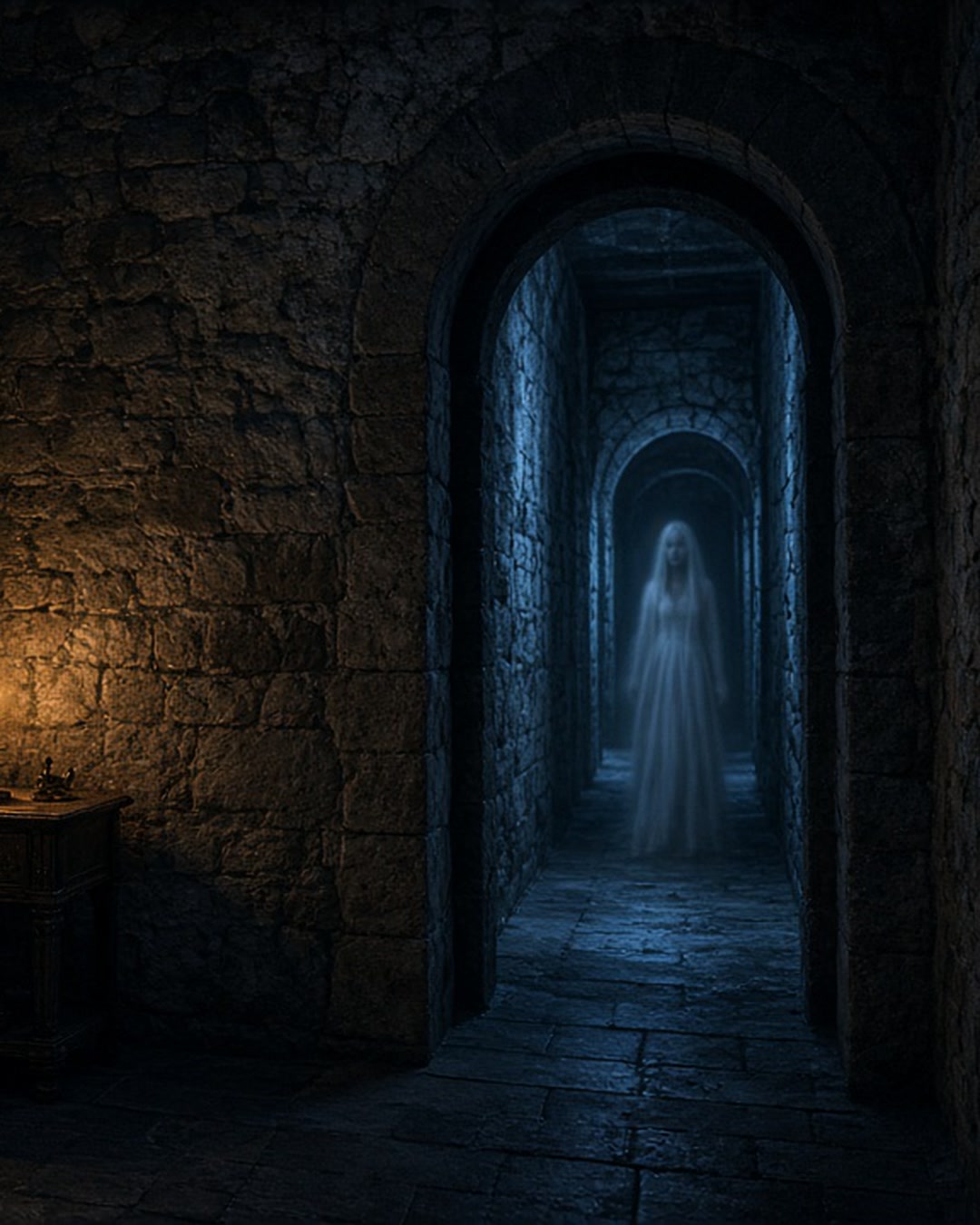
The legend: Compiano’s ghost rests on a nobleman’s own written record. In 1546 Agostino Landi described how his wife Giulia, who had died young after childbirth, kept visiting him in their marriage chamber. She appeared seated on a walnut chest and asked why he never came to see her. He wrote of embraces, and of weeping each time she vanished. The visits went on for months. The castle later served as a state prison and a girls’ boarding school, and visitors have added their own reports of whispers and presences in the corridors.
The stay: The castle is a small hotel with rooms inside the fortress, some over the old sentry walkways, and suites in its oldest tower.
Travel notes: Borgo Val di Taro, nearby, has a station on the Parma to La Spezia railway. Autumn is porcini season in Val Taro. The castle of Bardi, with its own famous ghost, is close by. Official site: castellodicompiano.com
Castello Malaspina di Fosdinovo, Tuscany
Where: Fosdinovo, in the Lunigiana hills of the province of Massa-Carrara, with views towards the Apuan Alps and the sea.
The legend: The most famous ghost here is Bianca Maria Aloisia Malaspina, a young noblewoman who, according to the legend, was walled up alive by her own father for loving a stable boy. Some say a damp stain on the ceiling of the throne room is her mark. Other stories tell of a marchioness who disposed of her lovers through a trapdoor, and a marquis whose bed is said to “breathe”. Witnesses describe strange phenomena and sightings of Bianca herself, and staff have told guests which bedrooms are where odd things occasionally happen.
The stay: The castle offers B&B rooms furnished with original pieces, including one in the west tower beneath the sentry walk. It describes the experience as deliberately far from standard hotel service.
Travel notes: Sarzana is the nearest railway station; Pisa has the closest major airport. Spring and early autumn are ideal. Nearby are Lerici, the Gulf of La Spezia and the marble quarries of Carrara. Official site: castellodifosdinovo.it
Castello Chiola, Abruzzo
Where: Loreto Aprutino, in the province of Pescara, on a hilltop between the Gran Sasso and the Adriatic.
The legend: The castle’s own telling begins in the early 1700s, when a Count Silveri lived here. His wife’s lady-in-waiting, a young woman named Sharan, refused his advances again and again. One evening at sunset he cornered her at the top of the manor; she fled through the corridors to the highest ledge and fell to her death in the courtyard. Staff have long described a beautiful young woman running through the corridors at night, as if still fleeing. Some years ago, British guests told the management they had heard cries, voices and sighs from the third floor.
The stay: Castello Chiola is a historic residence hotel with rooms and suites inside the castle.
Travel notes: Pescara, with its airport and railway station, is the nearest city. Spring and autumn suit the hills; summer brings the coast. Explore the olive groves around town, nearby Penne, and the Gran Sasso and Majella mountains. Official site: castellochiola.it
Practical Tips for a Night in a Haunted Castle
- Book ahead. Many of these places have few rooms, and one has a single suite. Weekends and autumn fill early.
- Check seasonal opening. Some castle hotels close or reduce service in winter, and weddings can take over a whole property. Confirm dates on the official website.
- Ask the staff about the legend. Owners and night staff keep these stories and often know details that never reach print. Ask which rooms have the most stories attached.
- Photograph respectfully at night. Several castles are also family homes. Stay in guest areas, never try a locked door, and use a tripod rather than flash for courtyard long exposures.
- Pack a small torch. Stone stairways and dark gardens are part of the charm.
- Keep a notebook by the bed. If you hear footsteps, singing or a knock at three in the morning, note the time and what you heard. Your notes may become part of the castle’s story.
The Door Left Open
Every one of these castles has been restored and furnished for modern guests. And yet the stories have not left. A White Lady still sings on full-moon nights in Trentino. A cook still flips the switches in Emilia. A young woman still runs through the corridors of an Abruzzo manor, as if the end of her story has never quite happened.
Nobody can promise you an encounter. What these castles offer is the chance to be there after dark, when the day visitors have gone and the old walls settle into silence. What you hear then, and what you decide it was, is up to you. Leave the curtain open a little. You may not be the only one awake.
Leave a Reply