
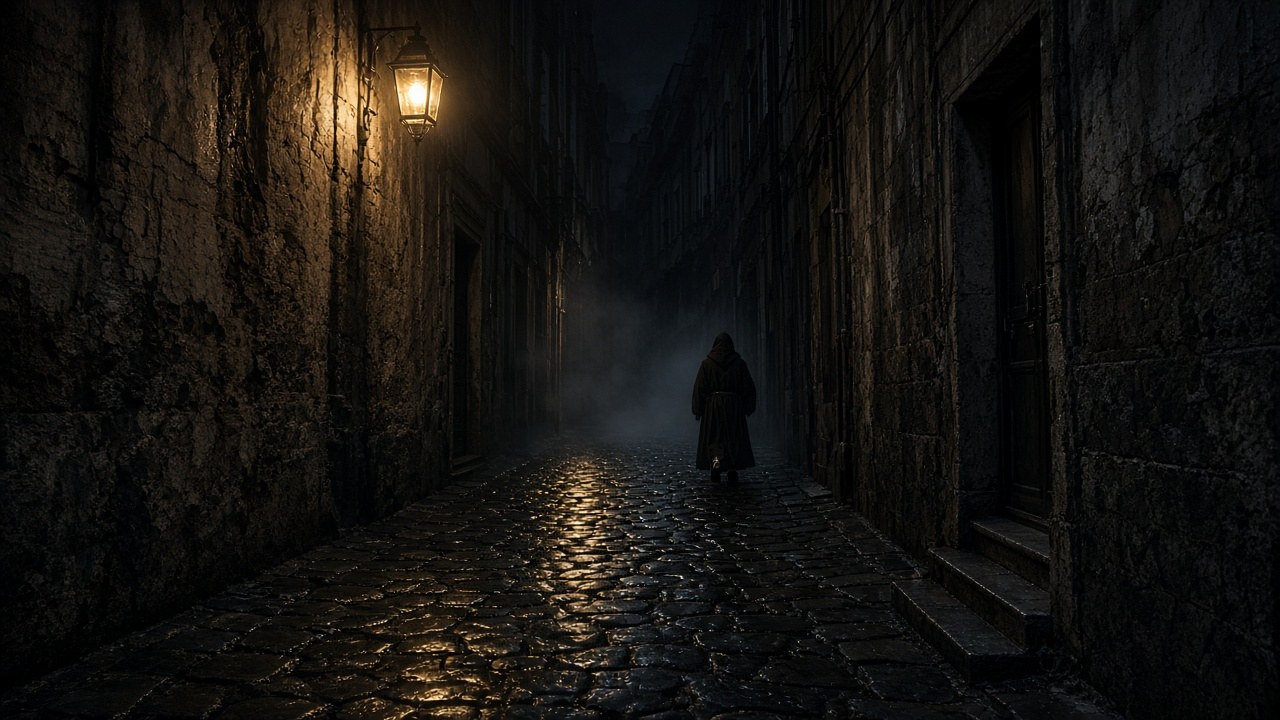
A field report on the Neapolitan little monk: coins left in the night, a red hood or a black one, and the household spirit still said to walk the alleys of Naples.
This article contains affiliate links; Italian Ghost Hunters may earn a commission if you buy through them.
Some spirits cling to a castle corridor or a lonely riverbank. The munaciello, the Naples household spirit, clings to the house. In Naples — and in the Campania districts that still speak of him — witnesses describe a small figure in a monk’s habit, often with silver buckles on his shoes, moving through kitchens, stairwells and courtyards after dark. He may leave coins, lucky lottery numbers, or a path to something hidden. He may hide objects, break crockery, or blow into a sleeper’s ear until the household wakes unsettled. Good fortune and misfortune travel under the same little hood. For investigators who take Italian household testimony seriously, that dual nature is not a contradiction. It is the point.
Like La Llorona on the water’s edge or the banshee outside an Irish door, he is less a museum piece than a living messenger — only his message arrives inside the walls, among the pots and the beds, where ordinary life is supposed to feel safe.
The Munaciello Legend in Neapolitan Folklore
In Neapolitan, munaciello — also spelled monaciello — means little monk. The core image is lean and stubbornly consistent across tellings. He is short. He wears a habit. Silver buckles flash on his shoes when light finds them. The colour of his hood is the traditional key: red is associated with good fortune; black with misfortune. Households that still speak of him watch for that detail the way a sailor watches the colour of the sky.
His gifts, when they come, are practical. Coins appear where none were left. Numbers arrive in dreams or on scraps of paper and later prove lucky. The desperate are said to be led — gently, or with a sudden shove of intuition — toward treasure, a forgotten purse, a favour that changes a week’s hunger into relief. Tradition answers unexpected wealth with a proverb that still circulates: perhaps he has the munaciello in the house.
His other face is harder. Objects vanish and return broken. Doors that were shut stand open. A breath at the ear in the middle of the night. Some tellers frame him as a mischievous household demon who tests patience more than faith. The etiquette around him is as important as the sightings. Do not reveal that he has visited, or misfortune follows. Offer food if the household believes he is near. Do not boast of gifts, or the gifts vanish. Silence and gratitude keep the balance; vanity and gossip tip it the wrong way.
That is the legend as told. What makes it powerful for field work is not that every alley agrees on the exact length of his habit. It is that Naples keeps returning to the same small figure in the same kind of night, inside the same kind of crowded house, with the same sense that fortune and fear can share one pair of buckled shoes.
Regional Variants
Naples holds the best-known form, but belief is not spread evenly across every district. Tradition prefers the historic centre’s narrow alleys over the elegant avenues — the close courtyards and stairwells where a small figure can turn a corner and be gone before a light is struck. Reported associations cluster around Sant’Eframo and Ponti Rossi, around Secondigliano, around Piazza Garibaldi, and through the centro storico along Via dei Tribunali and the streets that feed it. These are living neighbourhoods, not ruins. The munaciello is a city spirit who knows how to use a doorway.
Beyond the city, Castellammare di Stabia carries the name into the street map itself: a street named for him, a public reminder that the little monk is not only a fireside story. Elsewhere in Campania, household spirits of a cousin kind appear in local talk — small domestic presences that bring luck or trouble, answer offerings, and punish boasting — without always wearing a monk’s habit. The munaciello remains the clearest face of that family: named, dressed, and still argued over in kitchens after midnight.
Investigators working Naples should treat district as field condition. Belief has preferred certain kinds of stone and certain kinds of night for a long time.
Historical and Cultural Roots
The munaciello did not arrive as a single invention. Tradition carries at least three threads, and none of them closes the file.
The first is a folkloric love story set in the Porto quarter. A merchant’s daughter and a young apprentice fall into a tragic attachment. A deformed child is born of that union and dressed as a little monk — a disguise, a protection, or a cruel joke, depending on the teller. The child later vanishes from ordinary life and is afterwards seen as a spirit: small, hooded, moving through the houses of the city that refused him a quiet place among the living. A nineteenth-century Neapolitan writer helped fix that tale in literary memory; a well-known Neapolitan stage comedy later carried the little monk into theatres. The story is not a birth certificate. It is one of the ways Naples explains why a monk-shaped presence still walks where children once played in alleys.
The second thread ties him to the pozzari — the slight-built workers who maintained Naples’ underground aqueducts and wells. Hooded clothes, access to homes through well shafts, the ability to appear inside a courtyard as if from nowhere: some tellers have long suggested that living men in that trade, moving through the city’s hidden waterways, fed or shaped the legend. That view sits among others. It does not erase the coins left without a living hand, the numbers that arrive in sleep, or the breath at the ear when no one else is in the room. It is one reading of a city built on cisterns and secrets — not a verdict.
The third thread is simpler and older in tone: a mischievous household demon, neither wholly kindly nor wholly cruel, who attaches to a dwelling the way damp attaches to stone. Viceregal rental custom from the late sixteenth century, as reported in tradition, held that a tenant could leave without paying if a house was believed infested by monacelli. Whether that rule was applied often or rarely, the fact that tradition remembers it tells investigators something useful. Belief in the little monk once carried enough weight to rearrange rent, neighbours’ gossip, and the decision to stay or flee.
Taken together, the threads do not cancel one another. A tragic child-spirit, a hooded figure of the wells, a household demon of dual fortune — Naples has room for all three, and witnesses keep adding nights that fit none of them cleanly.
How Belief Shaped Behaviour and Places
Belief in the munaciello has never been only entertainment. It has shaped how people keep house, how they speak about sudden luck, and which addresses neighbours lower their voices when they name.
Food offerings are the clearest domestic practice. A little something left for him — bread, a dish, whatever the household can spare — is reported as courtesy toward a presence that notices neglect. Silence is the second practice. Those who claim his visit are warned not to announce it; those who boast of coins or winning numbers are said to find the favour withdrawn. The proverb about having the munaciello in the house works both as explanation and as social cover: unexpected wealth needs a story that does not invite envy or the tax collector’s interest, and a little monk provides one.
Geography does the rest. Alleys of the centro storico, the feared corners near Sant’Eframo and Ponti Rossi, the blocks around Piazza Garibaldi, the courtyards of Secondigliano — these places already carry dense human traffic, old wells, and thin walls. The munaciello gives those spaces a specific small silhouette. A sound on the stair, a missing key, a coin on a table that was bare at dusk: in a district that already knows his name, the mind reaches for him before it reaches for anything else. Belief also once shaped tenancy. A house whispered to be full of monacelli was, in reported tradition, a house a tenant might lawfully abandon. That is folklore as property law — and a reminder that Naples took the little monk seriously enough to write him into the cost of staying.
For investigators, that history is field condition. You are not only chasing a short figure in a habit. You are working inside a culture that already decided what certain night sounds in a courtyard mean, and which gifts it is dangerous to brag about.
Modern Munaciello Sightings as Real Encounters
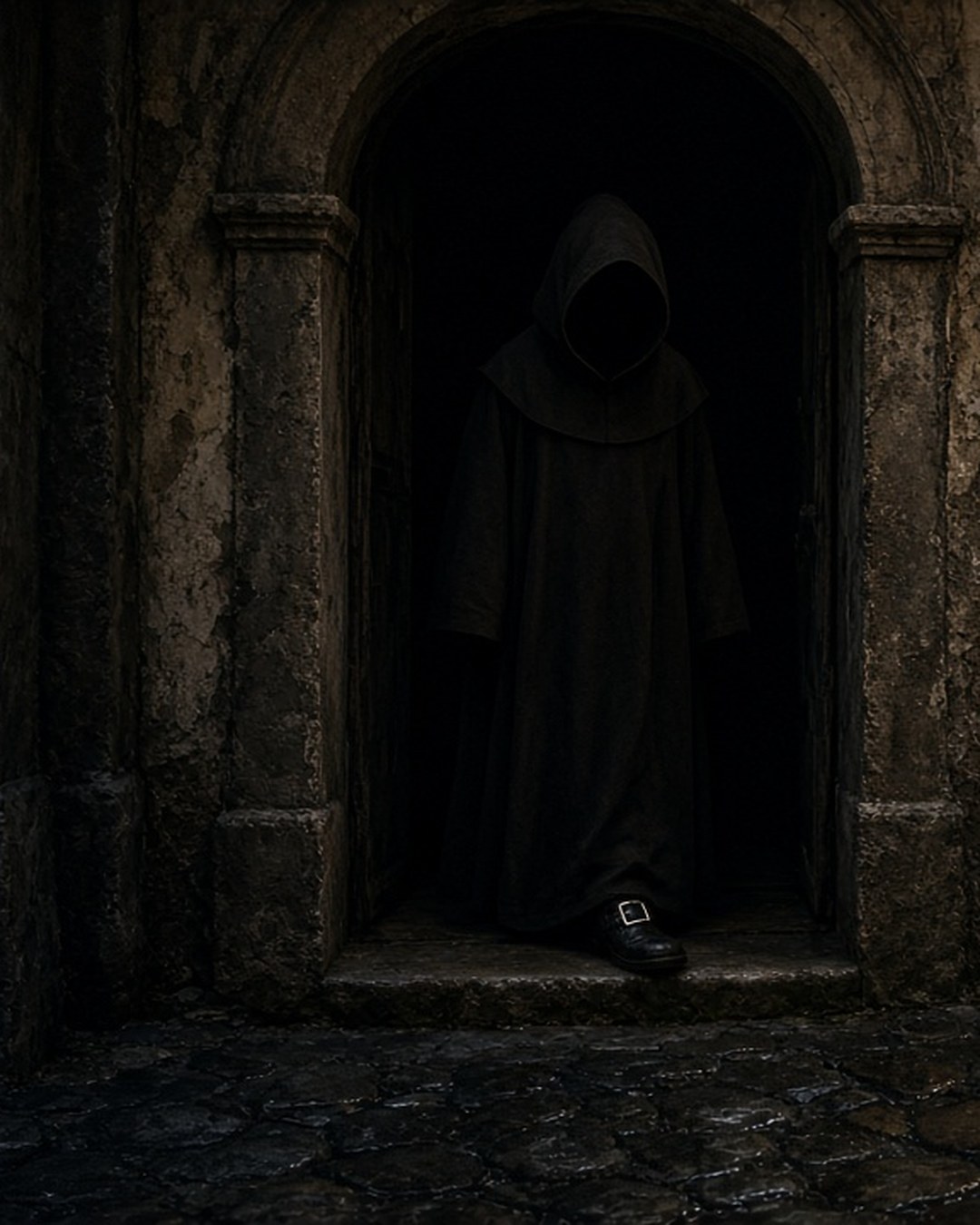
The accounts that matter most are the ones told as personal encounter: a visit to a particular house on a particular night, coins where none should be, a drawer that opens itself, a breath that is not the sleeper’s own.
Near Sant’Eframo, testimony has long attached to a house local people feared. One account, passed through the family of an aqueduct worker, describes relatives who would not stay the night there — not because the walls cracked, but because something small and hooded was said to move through the rooms as if it already owned the keys. In Secondigliano, a drawer-and-rattling tale is told as a progression: what began as the suspicion of a rat became, for those who lived with it, the recognition of a spirit that preferred mischief to vermin. Along Via dei Tribunali, a philosophy student is remembered in neighbourhood talk as having crossed an irritable munaciello — objects displaced, sleep broken, a sense of being tested by a presence that did not care for clever arguments. Near Piazza Garibaldi, a widow’s story holds that coins appeared when need was sharpest, left without a living visitor she could name, and taken as the little monk’s help rather than chance.
None of these tellings names a laboratory. They name streets. They name the kind of night when a Neapolitan household already knows which cupboard to check and which remark not to make at breakfast. Folklore is how communities store encounters that would otherwise be lost between one rent day and the next. The open question for the file is why so many households, across so many decades, keep reporting the same short monk in the same kind of house — and why fortune and fear still arrive wearing the same silver buckles.
Italian ground carries other strong files of place and presence — from Castello di Montebello, where a child’s call is still said to rise from the dark, to the quarantine silence of Poveglia in the Venice lagoon. The munaciello belongs to a different scale: not a fortress or an island, but the stairwell outside your door.
Why the Story Endures
The munaciello endures because he fits the city he haunts. Naples is dense, vertical, and full of rooms that open onto other rooms. Night erases the difference between a neighbour’s footstep and something that should not have a footstep. Hunger and luck are daily weather. A little monk who can fill a pocket or empty a drawer needs no castle battlements to freeze a witness in bed.
He also endures because he is unfinished. In every telling he may still be in the house. The next coin has not yet been left. The next black hood has not yet been seen on the stair. That open ending is what keeps him attached to alleys and courtyards, and what keeps listeners lowering their voices when something small moves where no child should be awake.
He is a reminder that the strongest Italian legends are not only haunted castles and quarantine islands. Campania carries a household spirit who belongs to kitchens, wells, rent and rumour — tied to the Porto quarter’s old grief, to the aqueduct dark beneath the streets, and to the thin edge between a blessing and a warning. If you work Naples ground where his name is still spoken, note wells and shutters, and if you find a coin where the table was bare, do not boast until you know which hood was watching.
The file on the munaciello has never closed. In the right kind of Neapolitan night, inside the right kind of narrow house, it still feels as if someone small in a habit is deciding whether tomorrow brings fortune or fear.
If the little monk in the alley has you thinking about turning legends like this into your own ghost mystery novel, Ghost Mystery Writer is a downloadable library of 456 prompts for writing complete ghost mystery novels with a free AI chat assistant, built for people who self-publish on Amazon. For the craft side of the genre, start with our guide on how to write a ghost mystery novel.
Leave a Reply