
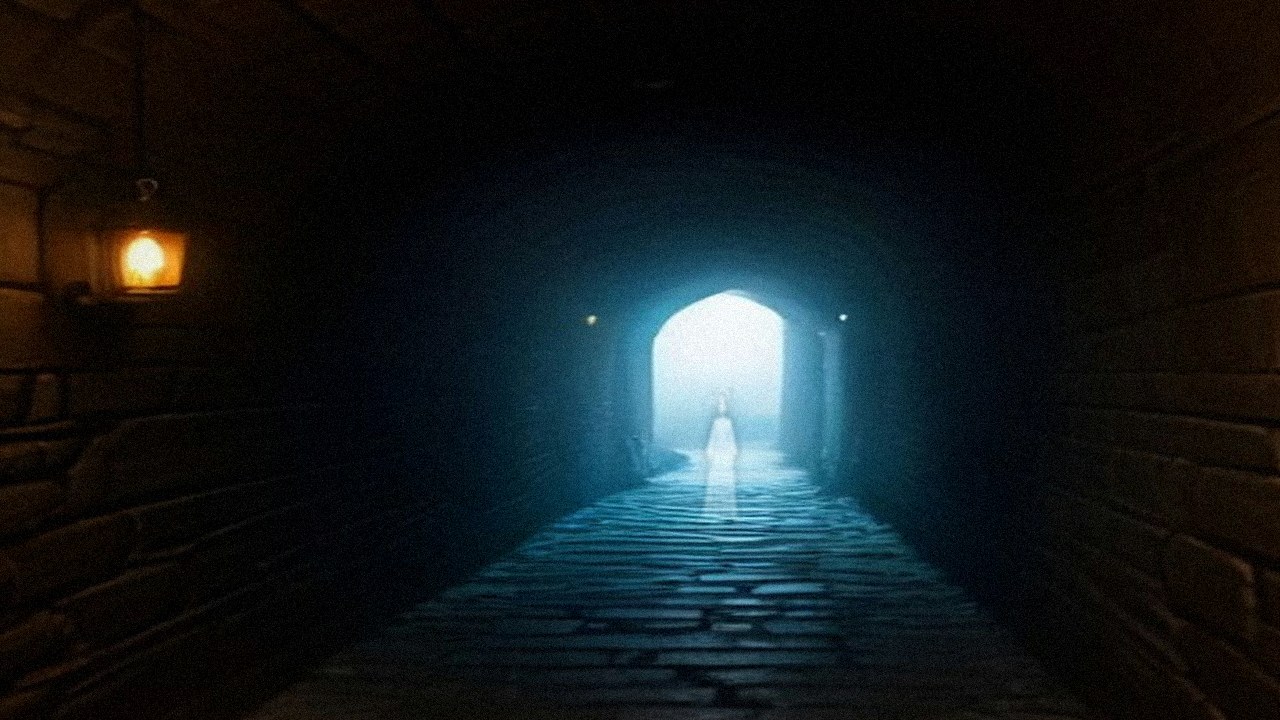
A seventeenth-century street sealed under the city’s grandest buildings, where a lost girl is still said to wait for company in the dark.
You step off the Royal Mile, out of the noise of buses and bagpipes and tourists, and within a few minutes the city has closed over your head. The air changes first. It is cooler down here, still and faintly damp, carrying the smell of old stone that has not seen daylight in more than two and a half centuries. The ground tilts steeply beneath your feet, because this was once an open street running down the side of a hill. Doorways open on either side into rooms that were kitchens, workshops and bedrooms. Some still hold the ghost of a fireplace. Then the guide lowers the lights, the group falls quiet, and you begin to understand why so many people leave Mary King’s Close convinced that they were not the only ones listening.
This is one of the strangest places in Scotland, and one of the best-known stops in haunted Edinburgh: a real street, with real houses, buried alive beneath the heart of its capital. And it has been haunted, by the accounts of those who lived in it and those who still walk it, for as long as anyone has written about it.
A Street Swallowed by the City
Edinburgh’s Old Town was built along a narrow volcanic ridge that runs down from the castle rock. The main street, the Royal Mile, follows the spine of that ridge, and from it dozens of narrow alleys called closes drop steeply away on either side. In the crowded centuries before the New Town was laid out, people lived stacked on top of one another in tall stone tenements that lined these closes, rich and poor sharing the same stairwells, the same smoke and the same darkness.
Mary King’s Close was one of these alleys, running down the north side of the High Street, across from the great cathedral. It took its name from a woman who lived and did business there in the first half of the seventeenth century, a reminder that the close was once a working, ordinary place, full of families, trades and gossip.
Its fate was sealed in the middle of the eighteenth century. The city wanted a grand new Royal Exchange on the High Street, and in the 1750s work began on the site. Rather than clear the closes entirely, the builders took down the upper storeys of the old tenements and used the lower floors as foundations, building the new structure on top of them. The building that rose there later became the City Chambers, where the city is still governed today. Beneath its floors, the lower levels of Mary King’s Close and its neighbours survived: rooms, passages and the steep line of the old street, roofed over and left in the dark.
For generations the buried close lay largely out of sight, entered now and then by workmen and the curious. Since the early 2000s it has been open to the public, but only on guided tours, which is why most visitors meet it the same way: in a small group, by low light, behind a guide who knows where every doorway leads.
Plague, Fear and the Stories That Followed
No history of Mary King’s Close can avoid the plague. Edinburgh suffered outbreaks over the centuries, and the epidemic of the mid-1640s is the one most often tied to the close. In crowded tenements with shared stairs and little light, disease moved quickly, and the measures used against it were harsh: the sick were isolated, households were shut in, and the dead were carried out of the closes by those whose grim task it was.
Out of that era grew the most famous legend about the close, that its plague-stricken residents were walled up and left to die when the street was sealed. It is a story historians argue over, and the sealing of the close came more than a century after the plague years. But the legend has never let go of the place. It speaks to something real: the memory of a community that suffered terribly in a small, dark space, and the feeling, reported again and again by those who go down there, that the suffering has left a mark.
For readers who have followed us to the quarantine island of Poveglia in the Venetian lagoon, the pattern will feel familiar. Wherever plague gathered people together to die, the stories of the dead seem reluctant to leave.
The Oldest Account: A House That Would Not Stay Empty
The haunting of Mary King’s Close is not a modern invention for tourists. One of the best-known accounts appears in a collection of supernatural reports published in 1685 by a Scottish scholar who gathered such cases as evidence of an unseen world.
The floating head. As the old account tells it, a law agent and his wife moved into a house in the close, a place others had avoided. One evening, as they sat reading, the wife saw the head of an old man hanging in the air, looking straight at her. It was not a dream and it did not fade at once. Her husband saw it too.
The child and the arm. The visions did not stop. According to the same account, a child’s face appeared beside the old man’s head, and then a bare arm emerged from the darkness, reaching towards the couple as if inviting them to take its hand.
The room that filled. Finally, the account says, the room itself seemed to fill with strange forms, among them a dog and other creatures, crowding the space until the couple were surrounded. The earliest writers treated it as a serious report of the supernatural, and so do we: the details are odd, specific and frightening, and they have never been explained.
Annie’s Room: The Little Girl in the Dark
If the 1685 account is the close’s oldest ghost story, its most beloved is far more recent.
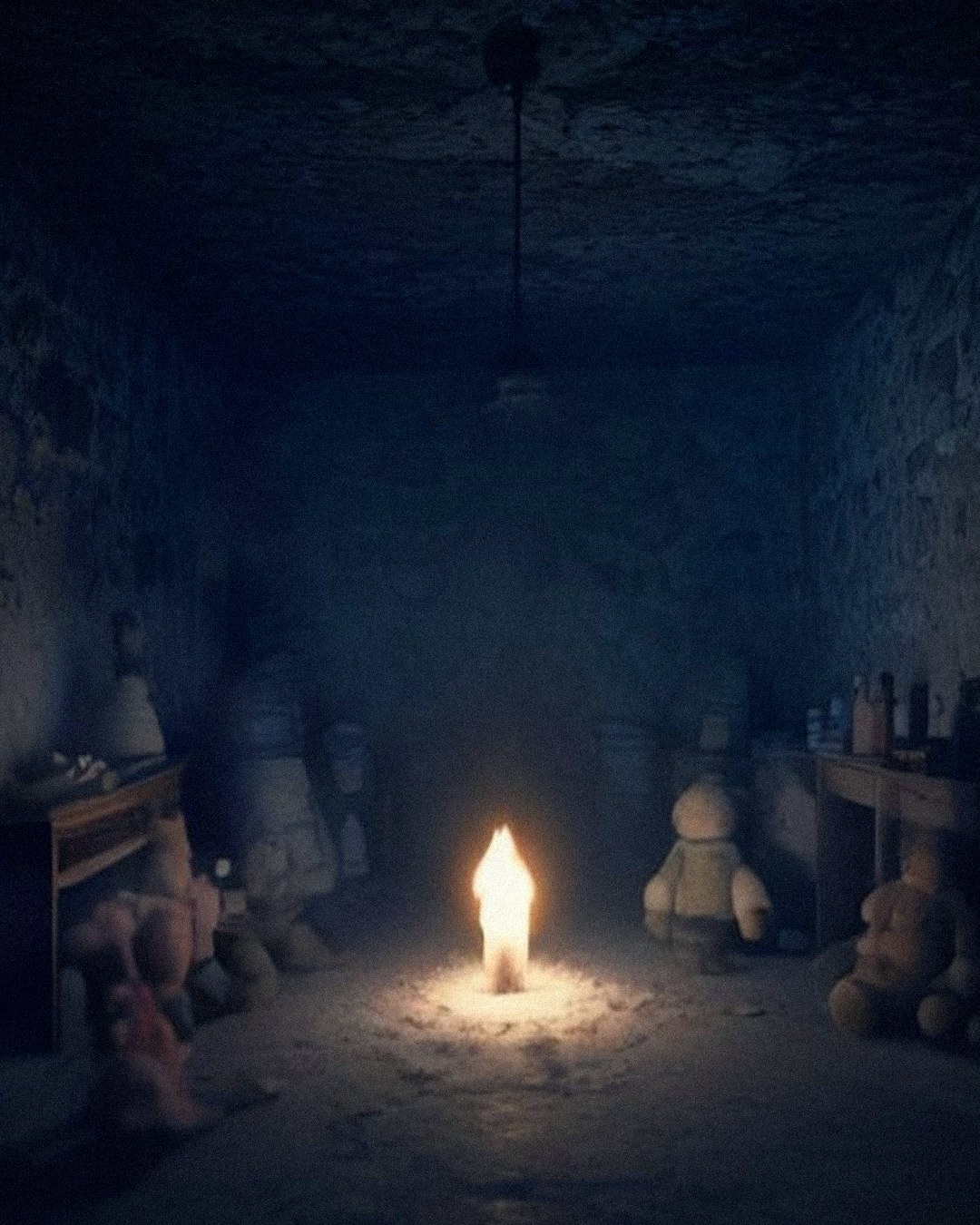
The visit of 1992. In 1992 a psychic visiting from Japan was taken through the underground rooms. In one small room she stopped, reporting that she felt something tugging at her and sensed a little girl, cold, hungry and frightened, who had lost her doll. The girl came to be known as Annie, and the room as Annie’s room.
The toys. What happened next is one of the most touching traditions in the haunted world. The psychic is said to have bought a doll for the girl and left it in the room. Visitors began to do the same. Over the years the corner has filled with dolls, soft toys, ribbons and small gifts brought from all over the world, a growing heap of kindness left for a child who may have lived and died in those rooms centuries ago.
The touch. Many visitors who stand in that room describe the same things: a sudden drop in temperature, a sense of being watched by someone small, and, most strikingly, the feeling of a little hand slipping into theirs or pulling at a sleeve or coat. Some have left in tears without being able to say why. Others insist the sensation was gentle, like a child wanting company.
Whether Annie was a real plague child, the echo of many children, or something else entirely, no one can say. But the toys keep arriving, and the room is never empty.
Annie is not the only lost child said to linger in the stories we have followed. At Castello di Fumone, the little marquis is still said to cry in the castle’s cold rooms, and the long-told accounts of Borley Rectory show how a place with unfinished sorrow can keep its figures for generations. Different countries, different centuries, and the same quiet question about who is still waiting.
Other Shadows in the Close of Haunted Edinburgh
Annie is not alone. Over the years, guides, staff and visitors have described a range of experiences in the buried street.
The figure in the doorway. People have reported glimpsing a tall, dark figure standing in a doorway or at the end of a passage, gone when they looked again.
Footsteps and voices. Sounds are a constant theme: footsteps where no one is walking, the murmur of conversation from empty rooms, and scratching or knocking from inside the walls.
The weeping woman. Some visitors have described a woman in dark clothing, seen kneeling or heard weeping in one of the lower rooms.
Cold and pressure. Sudden pockets of cold, a sense of heaviness in the chest and an overwhelming urge to leave a particular room are among the commonest reports. Investigators who work underground learn to note the natural draughts of old stone, but they also learn that some cold spots do not behave like draughts at all.
Investigations, Tours and Things That Went Wrong
Because the close can only be visited under supervision, it has never become a free-for-all for thrill seekers, and that may be part of why its reputation has held up. Paranormal investigators have been allowed in for organised vigils, and media crews have filmed there, often reporting unexplained sounds, temperature changes and unsettling feelings in the rooms most associated with the stories.
The site has also known the usual problems of a famous haunting. Popular retellings have blurred the line between documented history and tour-guide drama, the plague story in particular has been told in more lurid forms than the records support, and enthusiastic visitors have sometimes arrived determined to experience something, which makes careful observation harder. None of this explains away the oldest accounts, or the quiet, consistent reports from people who knew nothing of the legend before they felt a small hand in theirs.
Like the Catacombs of Paris, Mary King’s Close is a reminder that the underground holds onto things. Sound behaves differently in enclosed stone, darkness sharpens every sense, and the line between atmosphere and encounter is hard to draw. That is exactly why patient, respectful investigation matters here.
If You Are Going
- Book a guided tour. The close is only accessible with a guide. Do not try to reach any part of the underground city on your own.
- Follow the rules on photography and recording. Check what is allowed before you go and respect it. If recording is permitted, keep your device steady and note the time of anything you hear.
- Log what you feel, not just what you see. Write down temperature changes, sensations and moods with the room and the time. Patterns across visitors matter more than one dramatic moment.
- Bring a recorder if permitted. Old stone rooms are excellent places to try audio work. Our guide to EVP recorders for ghost hunting explains how to run a short session and review it honestly afterwards.
- Respect Annie’s room. If you bring a toy, bring something small and leave it with care. Do not move or take anything that others have left.
- Remember the dead. People lived, worked and died here. Speak quietly, treat the rooms as homes rather than sets, and leave as you found them.
- Note your own state. Underground spaces can make some people dizzy or anxious. If you need to step out, tell your guide.
What the Close Really Is
Strip away the tour scripts and the legends, and Mary King’s Close is something extraordinary: a fragment of a vanished city, preserved by accident under the weight of the new one. Its rooms held ordinary lives, births and marriages, quarrels and trades, sickness and grief. The people who lived there had no idea that their street would one day be roofed over and forgotten, and then rediscovered by strangers carrying torches.
Perhaps that is why so many visitors feel they are not alone down there. The close was never truly abandoned; it was simply buried with its stories still inside. The old man’s head in the 1685 account, the tall figure in the doorway, the footsteps in empty rooms, and a small girl who, by countless accounts, still reaches for the hand of anyone who stands quietly in her room long enough.
The toys keep piling up in the corner. Something, it seems, keeps asking for them.
Leave a Reply