
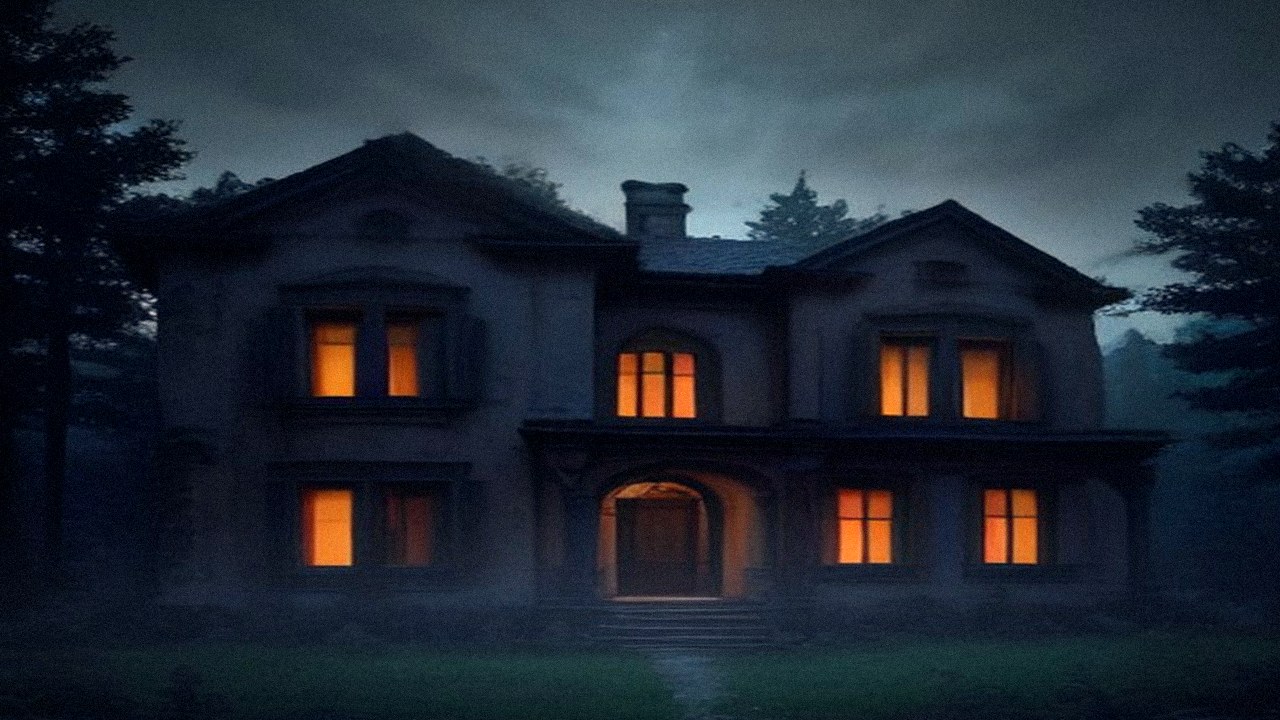
High in the woods above the Valsassina valley, a nobleman’s dream house has stood empty for generations, and some visitors swear the music inside never stopped.
The road climbs out of Cortenova in tight bends, and the valley floor falls away behind you. Chestnut and beech close in on both sides. Then, through a gap in the trees, the colour comes first: a faded red and ochre facade, too grand for a mountain slope, with rows of empty windows staring down the hill. Up close, Villa de Vecchi does not look ruined so much as abandoned mid-sentence. Doors hang open. Plaster lies in drifts on the floors. The fountain that once played in the garden is choked with leaves. And the silence is the kind that makes you lower your voice without deciding to.
Locals have called it many things over the years: the red house, the house of ghosts, the house of witches. Investigators who know northern Italy usually just call it the villa, as if there were only one: the haunted villa near Lake Como that every ghost hunter in Lombardy has heard about.
A Haunted Villa Near Lake Como: Where It Stands and How It Came to Be
Villa de Vecchi sits on a wooded hillside near the hamlet of Bindo, above Cortenova, in the Valsassina valley of the province of Lecco in Lombardy. Lake Como lies a short drive to the west, but up here the lake feels a world away. The air is colder, the trees are older and the nights come down fast.
The villa was built in the middle of the nineteenth century as a summer retreat for a count of a noble Milanese family, a man with a military career behind him and a taste for the exotic. The design mixed styles in a way that still surprises visitors: Italian proportions, decorative touches that recall the East, frescoed rooms, a grand staircase, a huge fireplace and a garden built around water. The estate was meant to be a place of leisure, light and music. Its builder, the story goes, never got to enjoy it for long.
The Legend Behind the Ghost Mansion
Everything that is said about Villa de Vecchi flows from one tragedy, told and retold in the valley in slightly different forms.
According to the legend, the count returned to the villa one day to find his wife dead, killed inside the house, and his young daughter gone. He searched the woods and the valley for her without rest. She was never found. Broken by grief, the count is said to have taken his own life not long after, and the house passed to other members of the family, who used it for a time before it slipped, little by little, into silence.
Some tellings add details that cannot be checked: a stranger seen on the road that day, a servant who fled, a door found locked from the inside. The core never changes. A mother died in that house, a child vanished from it, and a father could not live with the not knowing. That unfinished grief is what the valley believes still walks the rooms.
Later decades layered darker stories on top. In the second half of the twentieth century, as the villa stood empty and open to anyone who climbed the hill, rumours spread of night gatherings and occult rites in the main hall. Scrawled symbols and blackened patches on the walls kept those stories alive. Whether anything truly happened there or the rumours simply fed themselves, the reputation stuck: this became a house people dared each other to enter, and a house many came out of more quickly than they went in.
What People Report Inside
The accounts gathered from visitors, walkers and local families over the years are remarkably consistent. They are told here as they are told in the valley.
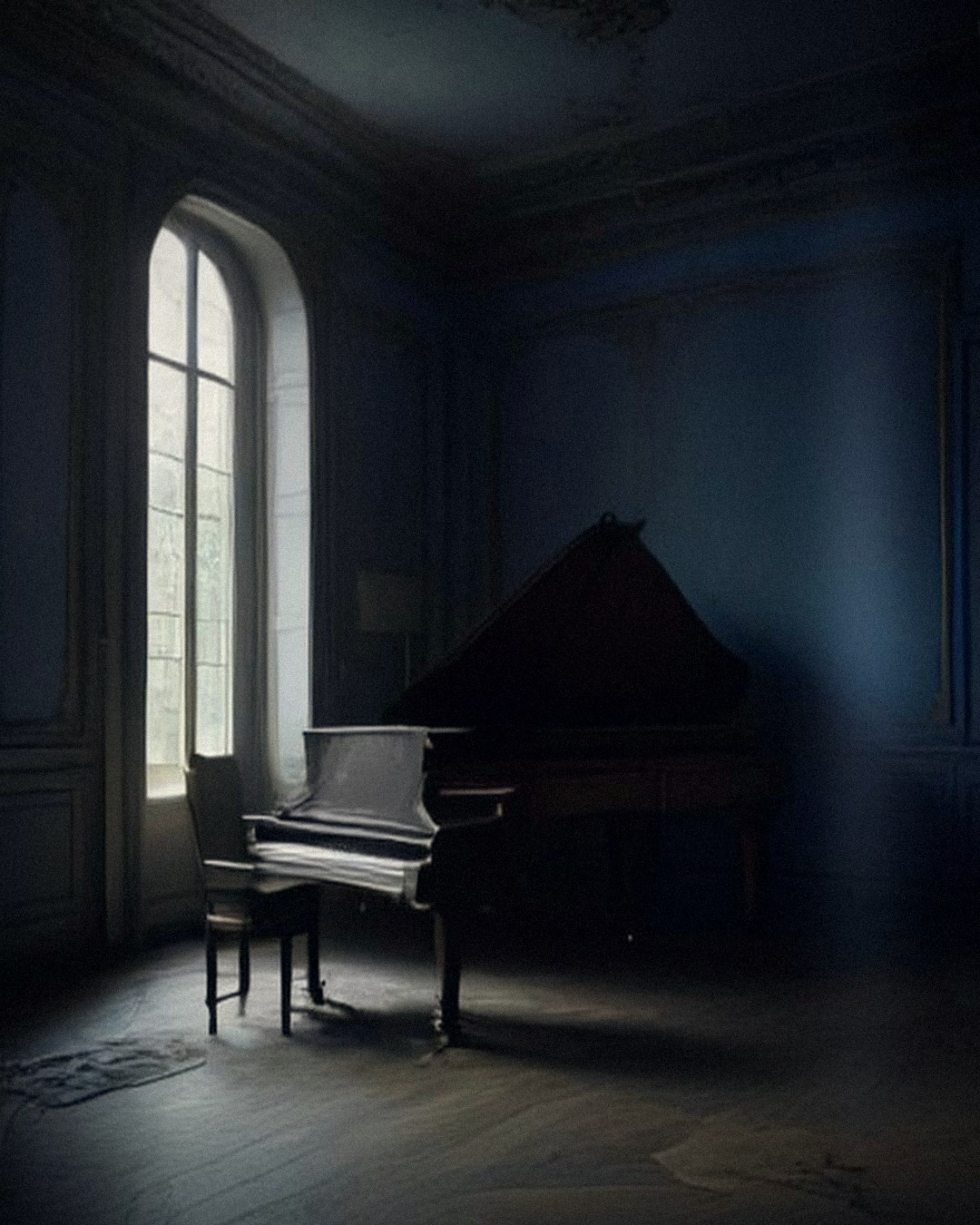
The piano in the night. The most famous report is music. People camping or walking near the villa after dark describe hearing a piano playing inside: a few slow notes, sometimes a melody, drifting from the empty windows. Old accounts say the count’s wife loved to play. Visitors who went in to look say they found no instrument fit to make a sound, or no instrument at all, and the music stopped the moment they crossed the threshold.
The woman at the window. Several witnesses describe a pale female figure standing at an upper window, looking down the hill towards the road, as if waiting for someone to come home. She is gone when they look again.
The child’s voice. Some of the most unsettling reports involve a small voice calling or crying somewhere deeper in the house, never in the room where the listener is standing. Those who hear it rarely stay to follow it.
Cold that follows. Investigators talk about sudden, localised cold in the upper rooms and on the staircase, a pocket of chill that seems to move with a person rather than stay in one place. On a summer night it can be cold enough to see your breath.
Footsteps on bare boards. Groups who split up inside report hearing steps overhead or on the stairs when everyone is accounted for. More than one person has described a heavy, measured tread, like a man pacing.
The feeling of being sent away. Perhaps the most common experience is the hardest to record: an overwhelming sense that you are not welcome, that you should leave, now. Seasoned visitors describe it as different from ordinary fear, more like being told.
Not every story needs an answer, and the villa does not offer many. A draughty ruin makes noises, of course. But a piano heard by strangers on different nights, a woman at the same window, a child’s voice that always comes from the next room: these are the accounts that keep people climbing the hill, and none of them has ever been explained away.
Investigations, Vandals and Things That Went Wrong
Villa de Vecchi has drawn amateur investigators for decades, but it has never been a place for careful, long-term study. The house is private, unsafe and unguarded for most of the year, which means most of what is “known” comes from short night visits, often by people more interested in a thrill than in evidence.
That has cost the place dearly. Frescoes have been defaced, floors stripped, windows smashed and walls covered in graffiti. Fires have been lit inside. Some of the occult symbols that fuel its reputation may well be the work of visitors trying to frighten the next group, which makes it hard to say what the house itself is doing and what people have done to it. For a serious investigator, that is the real tragedy of the site: so much noise has been added that the quiet voices, if they are there, are drowned out.
The structure itself is now dangerous. Floors have weakened, ceilings have come down and parts of the staircase are not to be trusted. People have been hurt in abandoned houses like this one simply by stepping in the wrong place in the dark. Any audio or temperature anomaly recorded in such conditions is worth noting, but no recording is worth a fall through a rotten floor.
If you want a sense of how other Italian sites hold their ghosts, compare the villa with Poveglia Island in the Venice lagoon, another place sealed off by danger and law as much as by legend, or with Castello di Fumone, where a family’s grief over a lost child also became a haunting. The vanished daughter of the villa has a sister story at Castello di Montebello, where another lost child is said to call from beneath the floors, and if you would rather spend the night inside a haunted building legally, our guide to haunted castles in Italy you can sleep in is the safer place to start.
If You Are Going
Villa de Vecchi is on private land and the building is structurally unsafe. Do not enter it, and do not climb fences or force access. Respect for the place and the people who live in the valley comes first.
- Experience it from public roads and paths only. The view of the facade through the trees is the image most people remember anyway.
- Go in daylight or at dusk, never alone, and tell someone where you are. Mountain roads and woods are disorienting after dark.
- Ask locally before you go. Access rules and conditions change, and people in the valley know the site better than any online map.
- Record from where you stand. A good audio recorder left running on a public path can still capture what drifts out of the house; our guide to EVP recorders for ghost hunting covers how to log sessions properly.
- Note time, temperature, weather and every person present, so that anything strange on the recording can be weighed honestly later.
- Leave nothing behind and take nothing away: no candles, no symbols, no souvenirs from the grounds.
- Remember that a woman and a child are at the heart of this story. Speak about them, and to them, with respect.
The House That Is Still Waiting
Strip away the graffiti and the dares, and Villa de Vecchi is a house built for happiness that became a monument to loss. A family came here for summer light and music. What the valley remembers instead is a mother who died, a child who was never found and a father who could not bear the silence that followed.
Perhaps that is why the stories are so gentle and so persistent at once. The woman at the window watches the road. The piano plays a few notes and stops. The small voice calls from the next room. They sound less like threats than like a household still waiting for someone to come home.
Whether the music on the hill is memory, imagination or something that has truly stayed behind, nobody has been able to say. The house keeps its own counsel. Stand on the road at dusk, look up at those empty windows and listen. Then decide for yourself what you heard.
Leave a Reply