
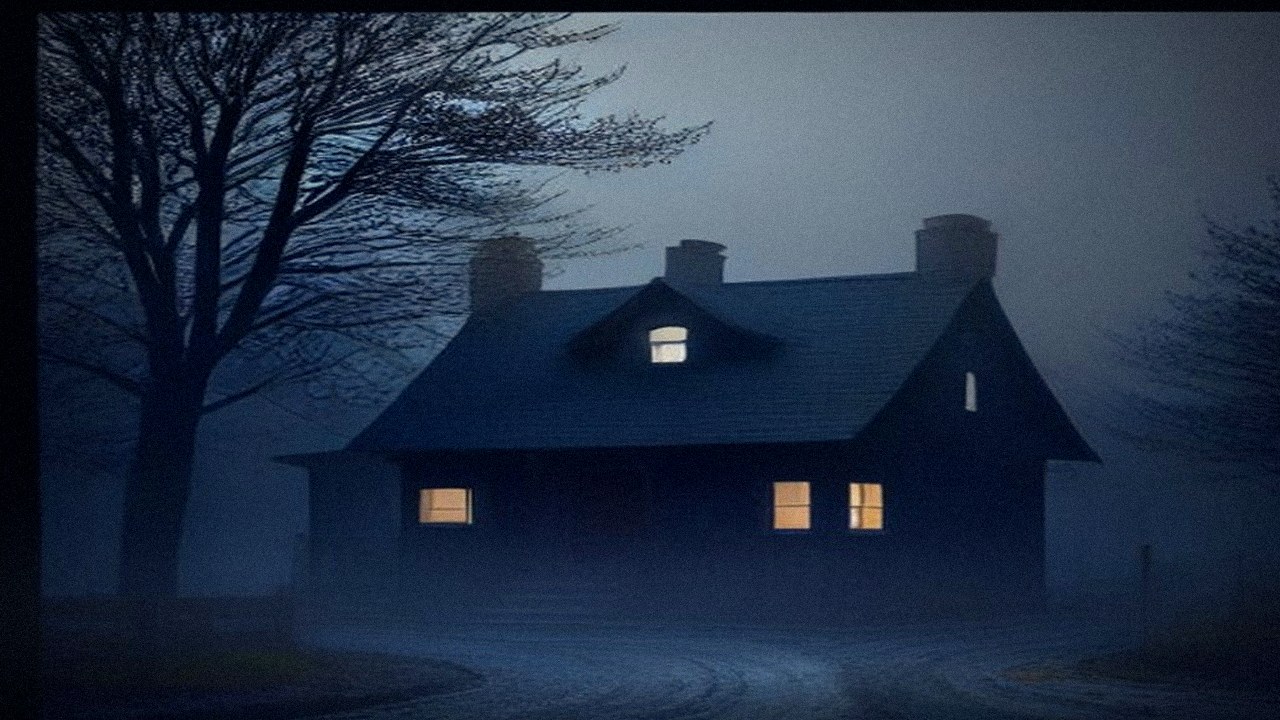
In a crowded little house in 1878, a young woman’s bed began to shake, words appeared on the wall above her, and small fires started out of nowhere. The town came to watch, and nobody ever settled what they saw.
The Amherst poltergeist began in Amherst, which sits at the narrow neck of land that joins Nova Scotia to the rest of Canada, a market town on a ridge above the wide salt marshes where the tides of the bay come rolling in. In autumn the wind crosses those marshes with nothing to stop it, and on clear nights the cold settles over the rooftops early. In the late 1870s it was a busy, practical place: shops, a railway, factories, working families packed into small wooden houses close to the street.
One of those houses became, for a little over a year, the most talked-about building in the Maritime provinces. People queued outside it. Doctors and ministers sat up through the night in its upstairs bedroom. Newspapers sent writers. And by every account they left with the same question they arrived with: what was happening to the young woman who slept in that room?
The Setting: A Small House, Too Many People
The cottage was an ordinary two-storey frame house rented by a working family. The household was large for the space it had. A married couple lived there with their young children, and the wife’s two younger sisters lodged with them, along with a brother and the husband’s own brother. Beds were shared, rooms were small, and privacy was something nobody in the house really had.
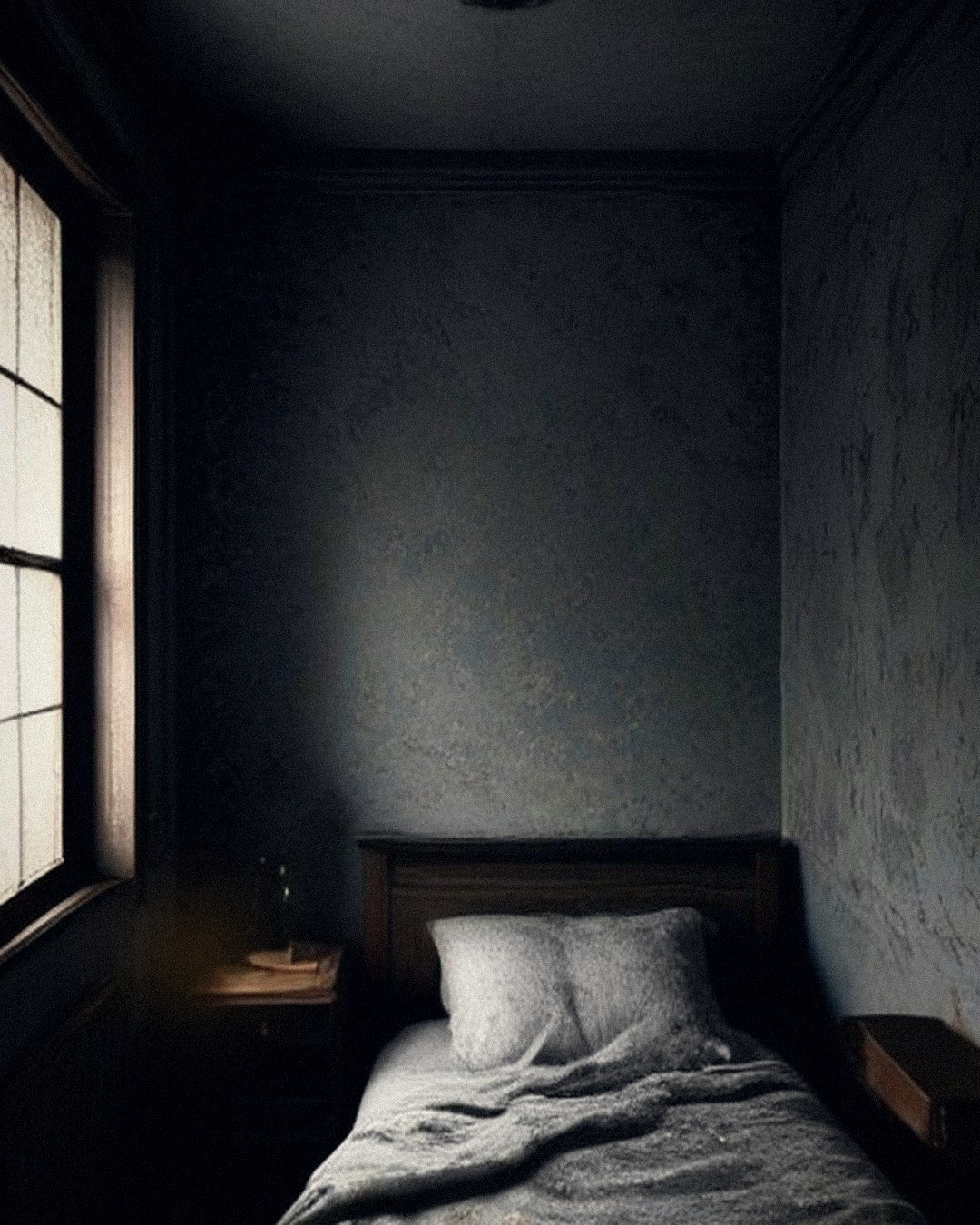
The younger of the two lodging sisters was about eighteen or nineteen years old. Accounts of the time describe her as quiet, plain-spoken and in poor health, a working girl with no reputation for fantasy or attention-seeking. She shared a bed with her older sister in a room at the top of the house. It was in that bed, in the late summer of 1878, that the haunting began.
Shortly before the phenomena started, she had been badly frightened by a young man she knew, who threatened her during a drive one evening and then left the district. Every telling of the case mentions this night, and almost every telling treats it as the hinge. Whether it opened a door in her, or simply marked the moment something chose her, is a question the record cannot answer.
The First Night: Something in the Bed
The sisters were woken by a rustling sound from under the bed, as if a mouse had got into a box of patches stored there. They searched and found nothing. The next night the box itself moved, sliding across the floor and rising in the air, according to the sisters, before they screamed for the household.
A few nights later, the young woman woke in distress, saying she felt she was dying. The family who came running reported that her body appeared to swell, her skin hot and her limbs straining, and that the swelling subsided only after a series of loud reports rang through the room, sharp enough to be compared to thunder or gunfire. This pattern would repeat for weeks: the swelling, the bangs, the sudden calm.
The Reported Phenomena of the Amherst Poltergeist
What follows is drawn from the accounts of the family, their neighbours and the visitors who sat in that bedroom. Some of these effects echo other famous cases. Several do not.
The bedclothes. Blankets and sheets were pulled off the bed by something no one could see, sometimes flung into the corner of the room, sometimes slowly drawn down while the family held the lamp and watched. When they were replaced, they were pulled away again.
The knocks and the bangs. Loud reports came from the walls, the floor and the bed frame. Over time the knocking began to respond to questions, rapping out answers the way it did in so many households of that century. Visitors tested it with questions they believed only they could answer, and some went away shaken.
The writing on the wall. On one of the most famous nights, the local doctor was present in the room. He and the family reported hearing a scratching sound, like a metal point dragged across plaster, and then found words cut into the wall above the bed. The message was a threat against the young woman’s life. The doctor had been watching her the whole time, and her hands, by his account, had not moved.
The fires. This is what set Amherst apart, and what has made it the classic fire poltergeist. Lighted matches were reported falling from the air near the ceiling. Small fires broke out in the house: clothing smouldering, a bundle under the bed catching light, a dress found burning. The family spent nights putting out flames that no one in the room had lit. In a wooden house, this was not a curiosity. It was terror.
The voices. In time, the young woman said she could hear voices that no one else could, and that they gave names and made threats, including threats to burn the house down. The knocks seemed to agree with her when questioned. Whatever was speaking to her, it spoke only to her.
The pain. Pins were reported sticking into her body as though driven by an invisible hand. She was slapped, by her account and those of the people beside her, and red marks rose on her skin. One visitor later described objects thrown at him across the room, including a knife.
Who Came to Watch
The case drew a remarkable cross-section of a nineteenth-century town. The doctor came first and kept returning, sometimes with colleagues. Clergy visited and prayed in the room, and reported that the disturbances did not stop for them. Neighbours crowded the street, and newspapers in the province picked the story up and gave it the name that has stuck to it ever since.
The most famous witness was a travelling stage actor who heard about the case and came to Amherst in 1879. He lodged in the house for several weeks and later published a book about what he saw, describing knocks, thrown objects, fires and the spirits’ threats in vivid detail. His account is the main reason the case is remembered at all. It is also the reason it is argued over: he had clearly hoped to turn the young woman into a stage attraction, and a public appearance at a hall was organised. It went badly. The phenomena did not perform on cue, and the crowd turned on the people who had promised them a spectacle.
Many later writers have leaned on that failed evening as if it settled everything. It did not. Witnesses who never stood to gain anything had already described the same events in that small upstairs room, months before any stage was mentioned.
The Haunting Moves On: How the Fire Poltergeist Case Ended
The landlord of the cottage, worried about the fires, wanted the young woman out of the house. She was sent to live and work elsewhere, first in a nearby town and later on a farm. For a while, by some accounts, the disturbances followed her. Then came the event that closed her part in the record, though not the mystery: a barn on the farm where she worked burned down, and she was charged with setting the fire. She was convicted and sentenced to several months in jail, and released after serving about one of them.
After that, the record goes quiet. The phenomena were reported to have faded. She married, moved away, and lived out the rest of her life far from Amherst. Years later, a researcher of psychic phenomena tracked her down and asked her about the events of 1878 and 1879. She would not perform them, or could not, and she did not take back her story either. What she told her family stayed in the family.
What Remains Unexplained
Sceptics have always pointed to the obvious: a frightened, unwell young woman at the centre of every event, a crowded house, a barn fire and a conviction. That theory has been told many times and deserves a sentence here. It does not explain the doctor’s account of the writing on the wall while he watched her hands, or the swelling witnessed by a household standing over her bed, or the fires that broke out in rooms she was not in, by the family’s testimony.
Then there is the question of how much of it was seen by people with nothing to gain. The family lost their peace, their privacy and very nearly their home. The doctor risked his standing in a small town by describing what he saw. The neighbours who sat up through those nights were not paid to be there. Their stories line up on the strangest details: the scratching in the plaster, the bedclothes rising, the matches falling from nowhere.
And there is the shape of the thing itself. Like the voice that grew out of the knocking on the Bell farm in Tennessee, the Amherst presence seemed to learn. It began with rustling in a box and grew, in a matter of weeks, into something that answered questions, made threats and gave itself names. Whatever it was, it did not stay simple. In that it recalls another violent household haunting, the Black Monk of Pontefract, where a family also lived for months with a presence that grew bolder by the week.
Lessons for Investigators
The Amherst case is a warning about how a haunting can be swallowed by the people who come to study it. If you ever find yourself in a house like this one, these are the lessons it teaches.
- Put the person first. At the centre of most poltergeist cases is someone young, frightened and exhausted, as in the Enfield case in north London. Their wellbeing matters more than any recording.
- Write it down the same night. The most valuable Amherst testimony came from people who described what they saw immediately, before anyone had a story to sell. Keep a timed log and have every witness sign their own account.
- Note where everyone was. For each event, record the position of every person in the room, especially the person at the centre. That single habit would have answered half the arguments about this case.
- Treat fire as an emergency, not evidence. If a case involves unexplained fires, safety comes first. Keep extinguishers and water to hand, and never leave anyone alone in a room where flames have appeared.
- Never turn a case into a show. The moment Amherst went on stage, its credibility suffered. Phenomena do not perform for crowds, as investigators found in the Rosenheim law office too, where events gathered around daily routine rather than an audience.
- Respect the town. Amherst is a living community, and the family’s descendants are real people. Like the Greenbrier Ghost case in West Virginia, this North American case file belongs to a place, not just a story. Visit respectfully, and keep private homes private.
A Fire That Was Never Explained
The cottage on that Amherst street is remembered now as the setting of one of the great poltergeist cases of the nineteenth century, a story told and retold with every theory under the sun attached to it. But strip the theories away and what remains is simple. A family in a cramped house lived for more than a year with something that pulled at their bedclothes, cut words into their walls and lit fires in their rooms. A doctor watched it happen. A town lost sleep over it. And then it went quiet, without anyone ever giving it a name everyone could agree on.
On cold autumn nights, when the wind comes in off the marshes and rattles the windows along the old streets, it is worth remembering that the question asked in that upstairs bedroom in 1878 was never answered: what was it that knew her name, and why did it burn?
Leave a Reply