
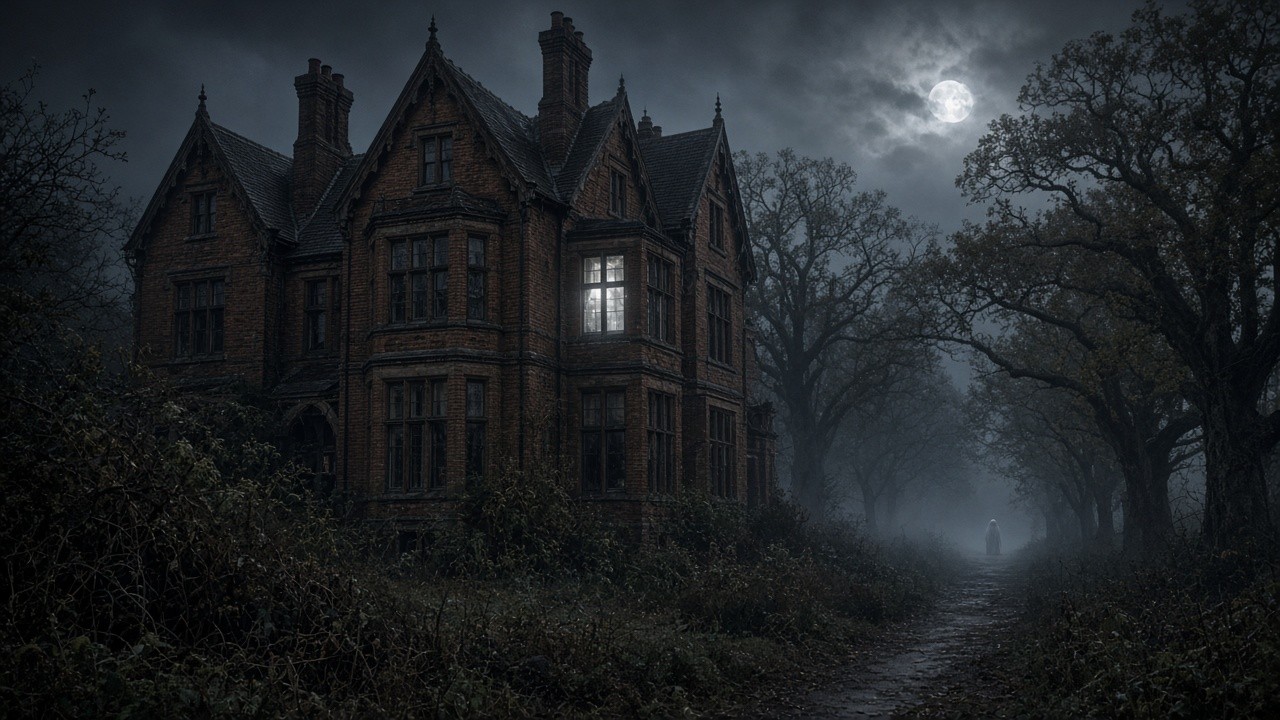
A field report from a quiet corner of Essex, where Borley Rectory, a red-brick Victorian house, gathered phantom nuns, ringing bells and pleading words on its walls, and where the questions outlived the house itself.
A House That Should Have Been Ordinary
Nothing on the road to Borley prepares you for its reputation. The lanes wind through low farmland near the border between Essex and Suffolk, the River Stour moves somewhere below the fields, and the village is little more than a scattering of houses and a small church on a rise: hedgerows, rooks, a churchyard with leaning stones. Yet for much of the twentieth century this hamlet was known across the country, and then across the world, as the home of the most haunted house in England.
That house no longer stands. Borley Rectory burned in February 1939, and its shell was pulled down a few years later. What remains is the church across the lane and a case file so thick and so contested that investigators still argue over it. Borley is a lesson in how a case is built, how it is attacked, and how, despite everything, it refuses to close.
The Setting: A Victorian Rectory Beside the Church
The rectory was built in the early 1860s for the parish’s rector and his large family, on ground close to the church and, according to local belief, on the site of older buildings. It was a big, rambling, gloomy red-brick house, extended as the family grew, with outbuildings and long gardens bordered by trees, set in an isolated spot far from any town.
Rectors and their families came and went over the following decades, and that matters. Borley’s story is not one witness or one household. It is a chain of testimony passed from family to family over roughly half a century, each new arrival adding entries to a record none of them had set out to write. Borley was not the first English rectory to keep such a record: more than a century earlier, a Lincolnshire household wrote down the knocks of Old Jeffrey at Epworth Rectory in family letters while the house still shook.
The Legend of the Borley Nun
Every haunted house needs a reason, and Borley’s was a love story that ended in horror. The tale told in the village held that, centuries earlier, a monastery had stood nearby. A monk from that house fell in love with a novice from a convent some miles away, and the two planned to run away together, with the help of a coachman and a waiting carriage. They were caught. The monk, the legend says, was put to death, and the nun was walled up alive somewhere on the site where the rectory would one day rise.
Historians have found it hard to trace a monastery at Borley in the records, and the legend may have grown in the telling. But it did not need documents to take hold. It gave a shape to what people said they saw. The path along the edge of the garden where the nun was said to walk became known as the Nun’s Walk, and the rector of the time is said to have had one of the dining room windows bricked up because the figure seemed to look in while the family ate.
The Reported Phenomena: Testimony from the Families
What follows is the core of the case: what the people who lived there and visited said they experienced. It is told here as they told it.
The nun on the lawn. Around the turn of the twentieth century, members of the rector’s family reported seeing a dark, hooded female figure moving slowly along the Nun’s Walk at dusk. In the most often repeated account, several of the rector’s grown daughters were returning to the house on a summer evening when they saw the figure gliding across the grass. One of them went towards it, intending to speak, and it was gone. The nun would be reported again and again over the following decades, by family members, servants, visitors and villagers, nearly always at twilight and nearly always on that same path.
The phantom coach. Witnesses also described a horse-drawn coach racing through the grounds or along the lane and vanishing, sometimes driven, they said, by headless figures: the coach of the legend, still trying to carry the lovers away.
Bells, footsteps and lights. Like many large houses of the period, the rectory had a system of service bells running to the kitchen. Later occupants reported that these rang when nobody was pulling them, sometimes all together, sometimes in long, insistent bursts. Footsteps were heard in empty rooms and passages. Lights were seen in windows of rooms known to be unoccupied.
The skull in the cupboard. In the late 1920s a new rector and his wife moved in. The wife, sorting through the neglected house, is reported to have found a small human skull wrapped in paper in a cupboard. The household then began to hear the bells, the footsteps and other sounds, and in 1929 they contacted a national newspaper, which sent a reporter and a psychical researcher to look into the matter. The reports made Borley famous almost overnight, sightseers crowded the gates, and that couple did not stay long.
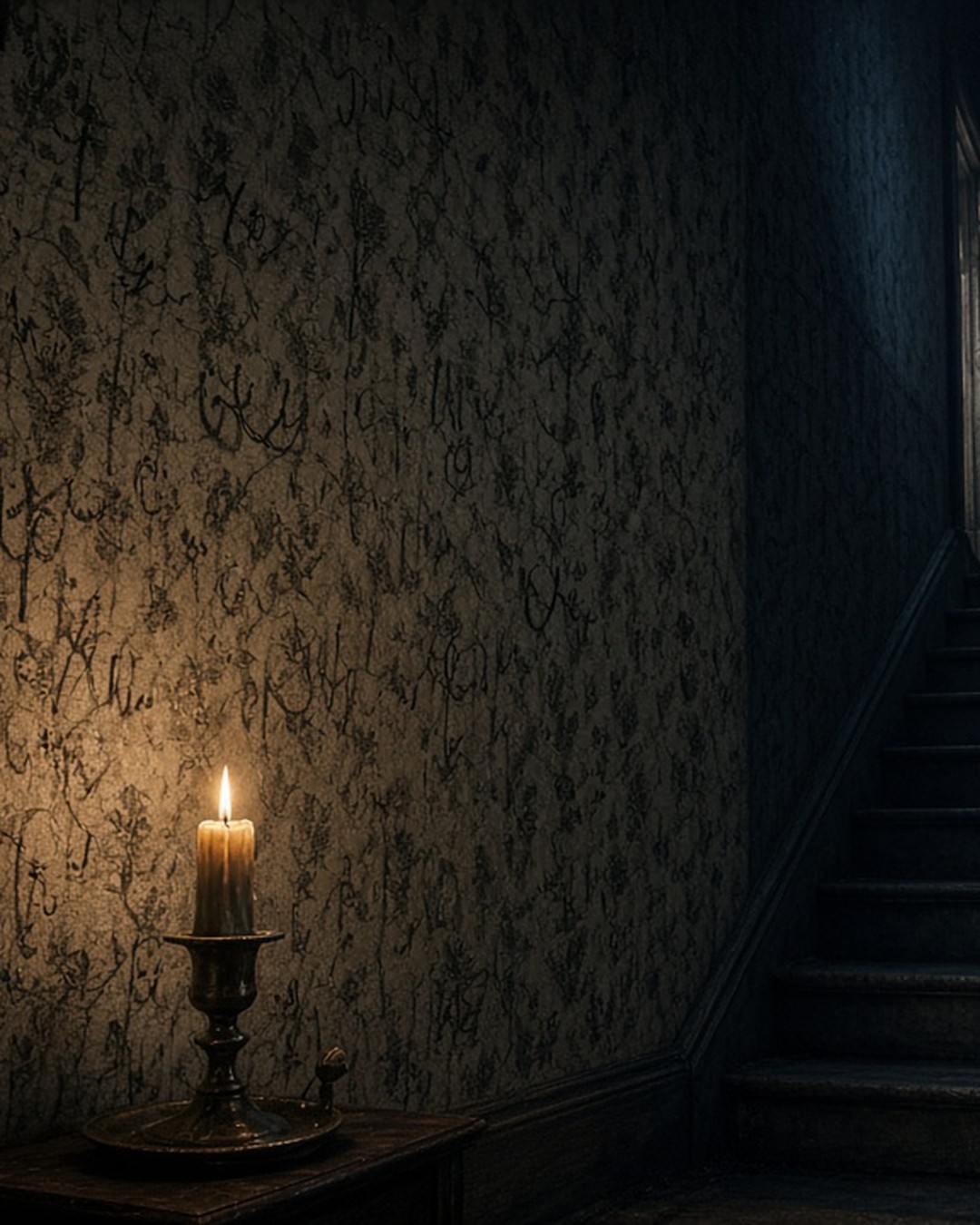
Flying objects and the writing on the walls. The most intense period of activity came in the early 1930s, with the next rector, his much younger wife and a small child in the house. The household reported stones and bottles thrown by nobody they could see, objects vanishing and reappearing, and the wife being thrown from her bed in the night. Strangest of all were the Borley Rectory wall writings: faint pencil scrawls on walls and scraps of paper, several seemingly addressed to the rector’s wife by name, pleading for help, for light, for prayers and for a mass. No one in the house claimed to have made them.
The Investigation: A Year of Watching
In 1937, with the rectory empty, the psychical researcher who had first come in 1929 took a lease on the house for a year. His method was unusual for its time. He advertised in a national newspaper for reliable, open-minded volunteers willing to spend nights in a haunted house, and enrolled dozens of observers.
Each observer received a printed set of instructions. They were to watch and listen, keep records of times and conditions, note any sound or movement, and examine the house methodically. Rooms were sealed, objects were outlined in chalk so that any movement would show, and observers took turns sitting up through the night in the silent house. Some reported nothing at all. Others recorded footsteps, raps, objects found moved from their chalk marks, sudden falls in temperature in particular spots, and new pencil marks on the walls.
For modern investigators, this is the part of Borley most worth studying: an attempt to replace one household’s word with a rota of independent witnesses, written logs and simple controls. It was imperfect, but the idea is still at the heart of good fieldwork.
The Séance, the 1939 Fire and the Bones
In 1938 a group connected with the investigation held sessions with a planchette, a small board used for automatic writing, well away from Borley. According to their accounts, a communicator described herself as a French nun who had been murdered on the site in the seventeenth century, and asked for her remains to be found and given a Christian burial. A second communicator, with a strange and unplaceable name, announced that the rectory would burn that night, and that the bones of a murdered woman would be found beneath the ruins.
That night passed without a fire. But some eleven months later, in February 1939, the rectory’s new owner was unpacking in the hall when, by his account, an oil lamp fell over, and the house went up in flames. It burned to a ruin. Villagers who gathered to watch later spoke of seeing figures moving at the upstairs windows of the burning building, including what one witness described as a girl or a woman in pale clothing, when no one was inside.
In 1943 the researcher returned to dig in the cellars of the ruin and found fragments of human bone, including part of a jaw. To those who believed the planchette, the prophecy had come true in two parts: the fire, then the bones. The remains were later given a Christian burial in a churchyard in a nearby parish. The shell of the rectory was demolished in 1944.
The Case Against, and the Case That Remains
No haunting has been attacked as fiercely as Borley. After the researcher’s death, a review published by a learned society for psychical research argued that much of the evidence was unreliable, that some phenomena may have been encouraged or exaggerated, and that the legend of the monastery and the walled-up nun had little historical footing. Other researchers answered with defences of their own, pointing to witnesses who had nothing to gain and to sightings that predated any publicity. The argument has never ended.
What remains unexplained is the part that matters most. Strip away the publicity and the quarrels, and you are still left with half a century of testimony from different families, servants, clergy and villagers, many of whom did not know one another, describing the same figure on the same path at the same hour. You are left with the scrawled appeals for prayer that no one in the house admitted writing. You are left with the planchette’s talk of fire and bones, and with a house that did burn, and a cellar that did contain human remains. And you are left with the figures at the windows on the night of the fire, seen by people standing in the lane with nothing to do but watch.
None of that is proof. But none of it has been explained away, either. The critics showed that the case was untidy. They did not show what the daughters saw on the lawn, or who wrote on the walls.
The Church Across the Lane
When the rectory went, the stories moved across the road to the little church. Visitors have since reported music or chanting from the church when it was locked and empty, footsteps on the path, and a dark figure among the graves at dusk. The church is a place of worship first, and the parish has long grown weary of night-time visitors.
Lessons for Investigators
Borley teaches more about investigation than almost any other case, precisely because so much of it was argued over.
- Write everything down at the time. The strongest parts of the file are logs kept on the spot, with times and conditions.
- Use more than one witness. A sighting shared by people who did not compare notes first carries real weight.
- Mark the scene. Chalk outlines worked in 1937; today, photograph and mark objects before a vigil so movement can be measured, not merely suspected.
- Keep the legend separate from the evidence. Record what is seen and heard before deciding who it might be.
- Expect to be challenged. Clean records and openness about your methods are what let a case survive a hostile review.
- Respect the place and the people. The rectory site is private land today and the church is an active place of worship. Never trespass, never enter at night without permission, and leave the churchyard as you found it.
A Case Still Open
Borley Rectory is gone, and so are most of the people who lived there, investigated it or argued about it. What is left is a quiet village, a small church on a rise, and a file that no one has ever managed to close. Was it a house haunted by a woman who wanted to be found and buried, who wrote on the walls and walked the lawn and appeared at the windows as it burned? Or was it something stranger still, a place where so many people expected to see something that, somehow, they did?
The families who lived there never agreed on the answer. The researchers never agreed either. Stand at the edge of that lane at dusk, when the rooks settle and the light goes grey over the fields, and you begin to understand why. Some cases end. Borley simply waits.
For more cases that refused to close, read our case files on the Enfield Poltergeist, the Rosenheim Poltergeist and the seventeenth-century Drummer of Tedworth.
Leave a Reply