
A field report from the 1716–17 record: knocks in a rectory, family letters written while the house still shook, and a Lincolnshire haunting the archives never closed.
This article contains affiliate links; Italian Ghost Hunters may earn a commission if you buy through them.
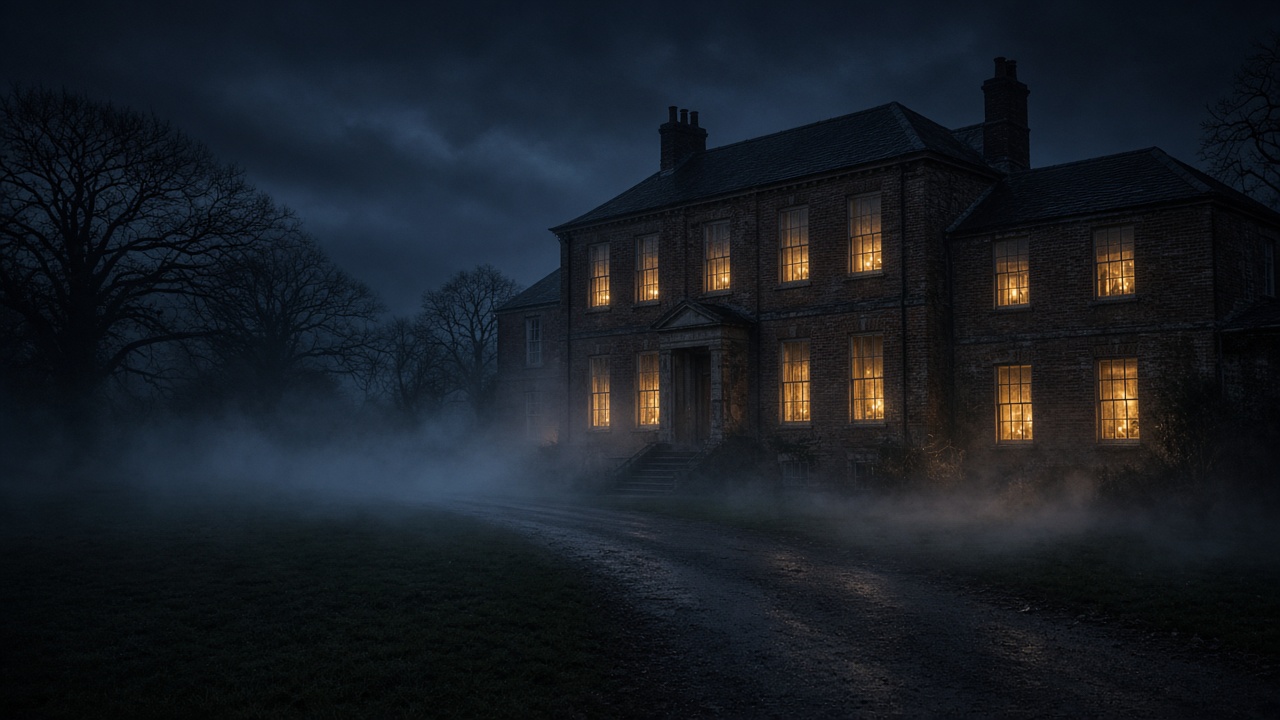
In the flat country of the Isle of Axholme, in north Lincolnshire, stands a brick rectory in the early-eighteenth-century style that the rector's family knew as home. In the winter of 1716 it became something else: a house that groaned at its dining-room door, knocked in threes through the nursery, rattled latches and warming-pans, and answered a rector's challenge with his own knock at the gate. The children called the knocker Old Jeffrey. What makes Epworth Rectory unusual is not only what was heard, but how carefully it was written down — in letters between mother, daughters and an eldest son away in London, in the rector's own journal, and in later statements gathered while witnesses still lived. Old Jeffrey is not a fireside tale that hardened into legend. It is an archive.
The Period and the Setting
Epworth is a market town on the low ground west of the Trent. The rectory there was the living of the rector, a clergyman who had held the parish since the mid-1690s. His wife ran a crowded household of daughters and younger children. Three of their sons, the eldest among them, were away at their studies when the disturbances began. One of those sons, later a famous preacher, would become one of the founders of Methodism; in December 1716 he was still a schoolboy, and the haunting reached him only as letters read aloud.
The house itself was not ancient timber. On 9 February 1709 a fire had destroyed the earlier wooden rectory. The family rebuilt in brick. By the winter of 1716 that new house was only seven years old — solid, ordered, and, until early December, ordinary enough for a large clerical family on a Lincolnshire living.
England in those months was still settling into the Hanoverian succession. The Jacobite rising of 1715 was recent memory. Prayer for the reigning king and the Prince was not a neutral habit in every household; at Epworth it would become one of the strangest details in the file.
What the Record Says About Old Jeffrey
The earliest continuous account is a letter from the rector's wife to her eldest son, dated 12 January 1716/17 — written within weeks of the events, while the house was still raw with them. On the first of December, she wrote, the maid heard at the dining-room door "several dismal groans, like a person in extremes, at the point of death." The family laughed her out of her fears. Two or three nights later, several of them heard a strange knocking in divers places, usually three or four knocks at a time, then a pause. It continued every night for a fortnight, sometimes in the garret, most commonly in the nursery or green chamber.
At first they kept the news from the rector, afraid he would take it as a warning of his own death. When the disturbance grew so troublesome by day and night that few dared be alone, his wife told him. He would not believe it was more than a trick to alarm them — until the next night, when it knocked loudly nine times by his bedside. He rose, searched, saw nothing, and thereafter heard it with the rest.
Christmas and the running on the stairs. One night — remembered in the family as among the fiercest — there was such a noise in the room over their heads, the rector's wife wrote, as if several people were walking, then running up and down stairs, so outrageous that she and her husband rose in the dark to light a candle for the children's sake. At the bottom of the broad stairs, holding each other, she felt as if someone had emptied a bag of money at her feet; he heard as if all the bottles under the stairs had been dashed in a thousand pieces. In the kitchen they found a candle. The children were asleep.
Old Jeffrey named. The household gave the knocker a name: Old Jeffrey. Later tradition associates the nickname with one of the daughters; contemporary letters simply treat Jeffrey as the family's working name for whatever walked the landings. A neighbouring clergyman, called in from Haxey, was told that the name had belonged to someone who had died in the house, and that a signal sound — a loud creaking toward the top of the building, like a saw or a windmill turning — was heard most nights about a quarter before ten.
Knockings during prayers. The rector noted in his journal that when the family came, in prayer, to the petitions for the reigning king and the Prince, the noise over their heads would grow great and constant. Some of the family called the spirit a Jacobite. The detail matters less as politics than as method: the disturbance answered a repeated cue in the liturgy, night after night, in a room full of people who were listening for it.
Servants, animals and moving things. The family's manservant and a maid sat in the dining-room that opened to the garden and heard knocking and groaning at the door; he opened it twice or thrice and saw nobody. Going up to the garret he saw a hand-mill whirled about swiftly while empty. In bed he heard a turkey-cock gobbling close by, and the sound of someone stumbling over shoes and boots he had left downstairs. A mastiff brought to comfort him howled when the latch jarred. The family dog, after a few days of barking at the unseen, learned to tremble and creep away before the noise began — a change the household came to treat as a reliable warning.
Latches tingled. A warming-pan lid clattered. Footsteps seemed to trail a silk nightgown past a daughter reading alone. Knocking moved from room to room ahead of those who chased it. The rector recorded that he was thrice pushed by an invisible power, once against the corner of his desk in the study. When he challenged the presence to come to him there "that am a man," it answered, according to the later collected account, with his own particular knock — the knock he used at the gate — as if to shiver the board.
How long it lasted. The January letter from the rector's wife placed the end about 28 December; other family letters and the rector's journal speak of knockings continuing into January 1717. The rector's own summary, later printed, runs from the first of December through December and January. The consensus of the family correspondence is roughly two months: sudden in early December, fierce through Christmas week, fading after the turn of the year.
The Epworth Poltergeist in the Context of Its Time
Epworth belongs to an age that still expected the dead — or the devil — to meddle in houses, and that was learning, at the same time, to demand written proof. The rector's family did what careful people of their century did: they wrote to each other. The eldest son, from London, sent back a sceptical checklist any modern investigator would recognise. Was there a new maid or man who might play tricks? Was anybody above in the garrets when the walking was there? Did the whole family hear it together, in the same place, at the same time? Could cats, rats or dogs be the sprites? Were they asleep when the parents went downstairs?
His mother answered him. They had been troubled with rats before and had tried a horn to frighten them away; after the horn, the noises grew louder and more distinct. New servants had come at Martinmas, yet she did not believe they caused it, because they were more frightened than anyone, and the noises were heard when those servants stood in the room. The manservant had been driven barefoot from the garret. One of the daughters trembled in her sleep before the noise woke her, and the activity often seemed nearer her bed than the others'.
The neighbouring clergyman sat up with the family until one or two in the morning and heard the knocking as usual — sometimes like the winding of a jack, sometimes like a carpenter planing deals, most commonly three knocks, a stop, three again, for hours together. The rector adjured it to speak if it had power. It knocked thrice aloud and gave no voice.
A century earlier, the Drummer of Tedworth had shown how a household disturbance could move from private terror into sworn depositions and print. Half a century later, the Cock Lane ghost would turn knockings into a London newspaper sensation. Epworth sits between them: quieter than Cock Lane, closer to the family hearth than Tedworth's trial, and unusually rich in letters written while the knocks were still fresh.
What Later Research Found
In 1720 the son who became the famous preacher went down to Epworth and took statements from those who had been in the house. In 1784 he published a narrative in his own monthly magazine, compressing and arranging the story for readers decades after the winter of Old Jeffrey. Historians of the case still prefer the contemporary letters and the rector's journal to that later retelling, precisely because memory lengthens and brightens with time.
In 1791 an eighteenth-century scientist and minister printed a collection of the family letters and the rector's account of the noises. His preface offered what he thought most probable at that distance of time: a trick of the servants, assisted by neighbours, meant only to puzzle the family and amuse themselves. No servant was named. None was punished. The same volume that carries the editor's verdict also carries the family's own tests — the searches, the open doors that showed nobody, the noises heard while suspected persons stood in plain sight, the sounds the household said they could not imitate. A later nineteenth-century writer noted that the family could not reproduce the perplexing noises themselves. The book has disagreed with itself ever since.
Later commentators pointed out discrepancies between the earliest letters and more vivid retellings, and suggested exaggeration or a clever child. Each theory fits a piece of the file. None quietly accounts for all of it: shared hearings in one room, the dog's change of behaviour, the cue at the prayer for the king, the empty mill turning, the rector pushed at his desk, the answering knock that matched his own. The paper trail is strong. The verdict is not.
For investigators who work later rectory cases — including the long, contested file at Borley Rectory — Epworth remains a model of what good early documentation looks like: dated letters, named rooms, multiple witnesses in one household, and a sceptical correspondent asking the right questions from outside.
What the Story Tells Us About Its Era
Epworth shows how a haunting entered the English clerical archive in the early eighteenth century. It began as a maid's fright at a door. It became a family correspondence, a neighbour's vigil, a rector's journal, a son's collected testimonies, and, decades later, a printed controversy in which editor and family still do not agree. The age believed spirits might knock. It also believed a careful letter might catch them on the page.
For the modern field worker the lessons are plain. Write while the house is still noisy. Note who is present and who is absent. Test the obvious traps — new servants, rats, empty rooms overhead — and record the answers even when they fail to close the case. Watch the animals. Watch the liturgy and any other repeated cue. And do not let a later sceptical preface erase a winter of testimony written by people who searched the stairs with a candle and found the children asleep.
The Old Rectory, Epworth, still stands, restored and kept as a museum of the rector's family's wider story. Visitors come for Methodism's childhood home. The letters remain for those who come for Old Jeffrey. Groans at a dining-room door on the first of December, 1716. Knockings through Christmas week. A name spoken on the landings. A silence that arrived, by most reckonings, before February was out. The archive is thick. The mystery is open. Whatever answered in that brick house between Advent and the new year never signed its name — only knocked, and left the family to write it down.
Another famous speaking haunting, with its own long and disputed written record, is told in our case file on the Bell Witch.
Another eighteenth-century English family account, set down by a mother for her children after years of footsteps and voices in a Hampshire manor, is told in our case file on the Hinton Ampner haunting.
If old rectory records like this make you want to turn a real haunting into your own ghost mystery novel, Ghost Mystery Writer is a downloadable library of 456 prompts for writing complete ghost mystery novels with a free AI chat assistant, made for people who self-publish on Amazon.
Leave a Reply