
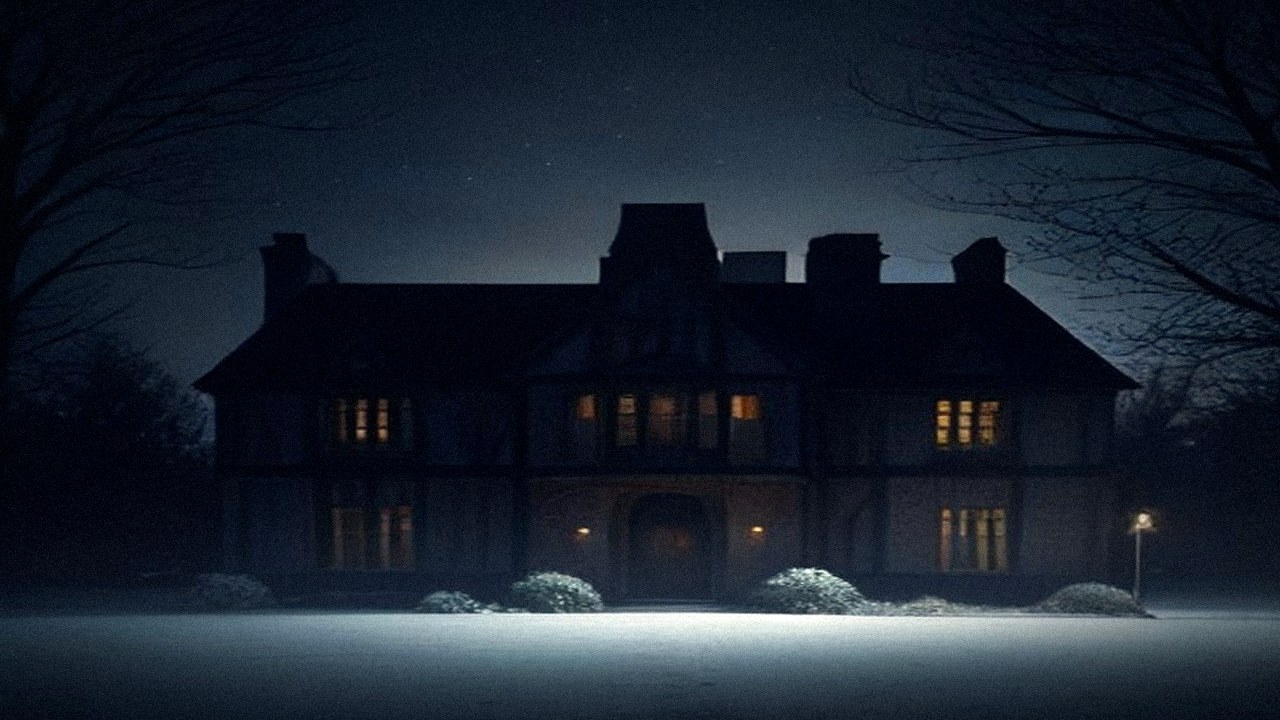
A field report from an eighteenth-century household record: a Tudor manor in the Hampshire downs, six years of footsteps, voices and rustling silk, and a written account a mother left so her children would know what drove the family out.
This article contains affiliate links; Italian Ghost Hunters may earn a commission if you buy through them.
There is a particular silence to an English manor after the candles go out. The timbers settle, the wind works at the casements, a dog turns over in the stable yard. At Hinton Ampner, in the chalk country of Hampshire, the household that moved in during the 1760s learned to know every one of those ordinary sounds, because they spent years listening past them for the other ones. Doors that slammed when no one was near them. Heavy footsteps in rooms that had been locked. The swish of a silk gown along a passage with nobody in it. Voices in the dark, talking low, then a shriek, then nothing. When the family finally left, the lady of the house sat down and wrote it all out, carefully and in order, for her children. That account is why the Hinton Ampner haunting is not a tale told in a pub but a record of haunted Hampshire: one of the most detailed first-hand ghost narratives to survive from eighteenth-century England.
The Period and the Setting
Hinton Ampner lies in the rolling downland east of Winchester, a scatter of farms, a small church and, in the eighteenth century, an old Tudor manor house of brick and timber. It was the kind of house that had grown by additions over generations: long passages, back stairs for servants, rooms that opened into other rooms, and a good deal of space for sound to travel in strange directions.
In the middle of the century the house belonged to an aristocratic family whose head had been widowed and whose late wife’s sister continued to live under his roof. She died in the mid-1750s, and he followed not long after, struck down suddenly. The house passed out of the family’s daily use and was let to tenants. With that, the stage was set for one of the strangest decades any Hampshire household ever recorded.
It matters to understand the world of the record. This was the Georgian age of letters and journals, of educated women keeping careful accounts of their households, of sea officers and lawyers who prized evidence and plain statement. The woman who wrote the Hinton Ampner narrative was precisely that kind of witness: well-connected, literate, practical, running a large establishment largely alone while her husband’s affairs kept him overseas.
The Hinton Ampner Ghost: What the Record Says
The family took up the tenancy in the mid-1760s, and the disturbances began almost at once. In her account, the lady of the house describes them building in stages, as if whatever was in the house were growing bolder.
The slamming doors. The first troubles were noises of doors being shut hard in the night. The household assumed intruders or careless servants. Locks were changed. The doors went on slamming. The lady describes having every door secured and the noises continuing in parts of the house where, by every practical check, no living person could have been.
The man in the drab coat. One of the earliest sightings came from a member of the outdoor staff, who reported seeing a man in a drab-coloured coat pass through the house and vanish. The description, as it circulated among the older servants and in the village, was said to resemble the late master. The account presents this as a report the family heard, not as a claim the writer could prove, and it is all the more unsettling for that restraint.
Rustling silk. Several witnesses reported the sound of a woman’s silk dress sweeping along floors and down the stairs, close enough to pass by them. A female figure in dark clothing was also described. In the household’s telling, the silk and the drab coat seemed to belong together, two presences tied to the house’s last owners.
The voices. The most famous part of the narrative concerns voices. In the later months the lady describes hearing, night after night, the murmur of conversation in an empty room: a woman’s voice, shrill at times, and male voices answering, never clear enough to make out the words. There were groans. There were noises like heavy falls and crashes that shook the house, and yet in the morning nothing had been moved and nothing broken.
The replaced household. One detail the account returns to is that the servants changed over the years, with new staff brought in who had no connection to the house’s past or its gossip. In her telling, the disturbances did not leave with the old servants. Whatever was happening at Hinton Ampner did not seem to depend on who was living there.
The brother’s watch. Near the end, the lady’s brother, an officer in the navy and a man not given to fancies, came to stay. He took the reports seriously enough to sit up through the night with a companion, armed, to catch whoever was behind the noises. In the household’s account, they heard the sounds as well, searched, and found no one. Soon after, the family gave up the tenancy and left, around the turn of the 1770s. The lady wrote her narrative shortly afterwards.
The Context of Its Time
To an eighteenth-century reader, a haunted manor was not an absurdity. It sat in a long tradition of English household hauntings that ran from the drumming at a Wiltshire house in the 1660s, which we followed through its own trial record in The Drummer of Tedworth, to the knocking spirit a Lincolnshire rectory family called Old Jeffrey in 1716, preserved in their own letters in Epworth Rectory. Hinton Ampner belongs to that same family of documents: a household, a run of nights, and literate witnesses determined to set down exactly what happened.
There was also a moral grammar to these stories that the age understood instantly. A restless spirit was often read as a sign of something unconfessed: a wrong done, a burial denied, a secret the dead could not leave behind. At Hinton Ampner, local talk had long whispered about the late master and his sister-in-law, and about a child said to have been born and hidden away. Nothing in the surviving record proves any of it. But it is important to see that the people of the time did not experience the haunting as random noise. To them it sounded like the house was trying to tell something.
The writer herself is careful on this point. She records what she heard and what others reported, she notes the precautions taken, and she does not pretend to an explanation she does not have. That restraint is exactly what gives the document its weight.
What Later Research Found
The old manor did not survive. Some two decades after the family fled, the house was pulled down and a new house raised on the estate in the 1790s. It was during the demolition, so the story goes, that workmen lifting the floorboards of the old building found a small skull hidden beneath them. Accounts differ on what kind of skull it was, and no one can now examine it. The detail has been repeated ever since because it fits the village rumour so precisely, and because no one has ever been able to make it go away. Remains hidden beneath the floor of a haunted place are a thread that runs through other cases too, from the buried passages of Mary King’s Close to the old manor in the Hampshire downs.
The lady’s narrative stayed in family hands for a long time before it was printed in a London periodical in the nineteenth century, a full century or so after the events. Publication turned a private family document into one of the classic cases of English ghost literature, and later writers on the supernatural have returned to it again and again, precisely because it reads like testimony rather than invention.
Over the years a few people have offered ordinary suggestions: smugglers using the house, settling timbers, servants with their own reasons. Those ideas have been aired, but none of them has ever closed the file. They do not account for what the writer insists on most: disturbances that continued through changes of staff, through locked doors, and through a night watch kept by armed men who searched and found nothing. The record is unusually consistent, and its author had every reason not to exaggerate. She was a woman of standing writing to her own children, not a showman seeking an audience.
Reading the Record as an Investigator
For anyone who investigates historic houses, Hinton Ampner is a model of how a haunting should be documented, and a reminder of how much depends on the quality of the witness. It is also a reminder that a house can work as an archive, holding its history in its rooms, the idea at the heart of our guide to writing a haunted house novel.
- Write it down at the time. The account carries weight because it was set down by the person who lived it, soon after the events, in sequence.
- Separate what you saw from what you were told. The lady distinguishes her own experiences from servants’ reports and village gossip. Keep that distinction in your own notes.
- Record your controls. Locked doors, changed staff and an armed night watch are all controls. Write down every precaution you take, so later readers can judge what it rules out.
- Beware the story outgrowing the file. Famous cases attract retellings that drift from the original testimony, a problem that dogged Borley Rectory for decades. Always go back to the earliest written account.
- Note who else was present. Multiple witnesses hearing the same voices at the same time is the strongest part of this record. Log names by role, times and positions.
- Respect the house’s living story. Rumours about the dead are part of a haunting’s context, but they are not evidence. Treat them gently and never present them as fact.
- Visit lawfully and respectfully. The present house is a later building with its own visiting arrangements; follow its rules and opening times, and never trespass on the surrounding farmland at night.
What the Story Tells Us About Its Era
The Hinton Ampner haunting shows us a Georgian household under strain: a mother largely alone, a staff who came and went, a brother who believed in evidence and still could not find the source. It shows us an age that took ghosts seriously enough to investigate them, and was honest enough to write down when the investigation failed.
Most of all it shows us a record that refuses to resolve. The manor is gone, the floorboards are gone, the small skull is gone. What survives is a careful account, in a steady hand, of footsteps on the stairs and silk on the floorboards and voices behind a door that opened onto an empty room. The family left because they could not live with it. The house was pulled down, and a new one built on the estate. Whatever walked those passages has never been named, and the question the lady left for her children is still the question left for us: who was talking in that room, and what were they trying to say?
If eighteenth-century records like this make you want to build your own ghost mystery around a house that will not keep its secrets, Ghost Mystery Writer is a downloadable library of 456 prompts for writing complete ghost mystery novels with a free AI chat assistant. It is built for people who self-publish on Amazon.
Leave a Reply