
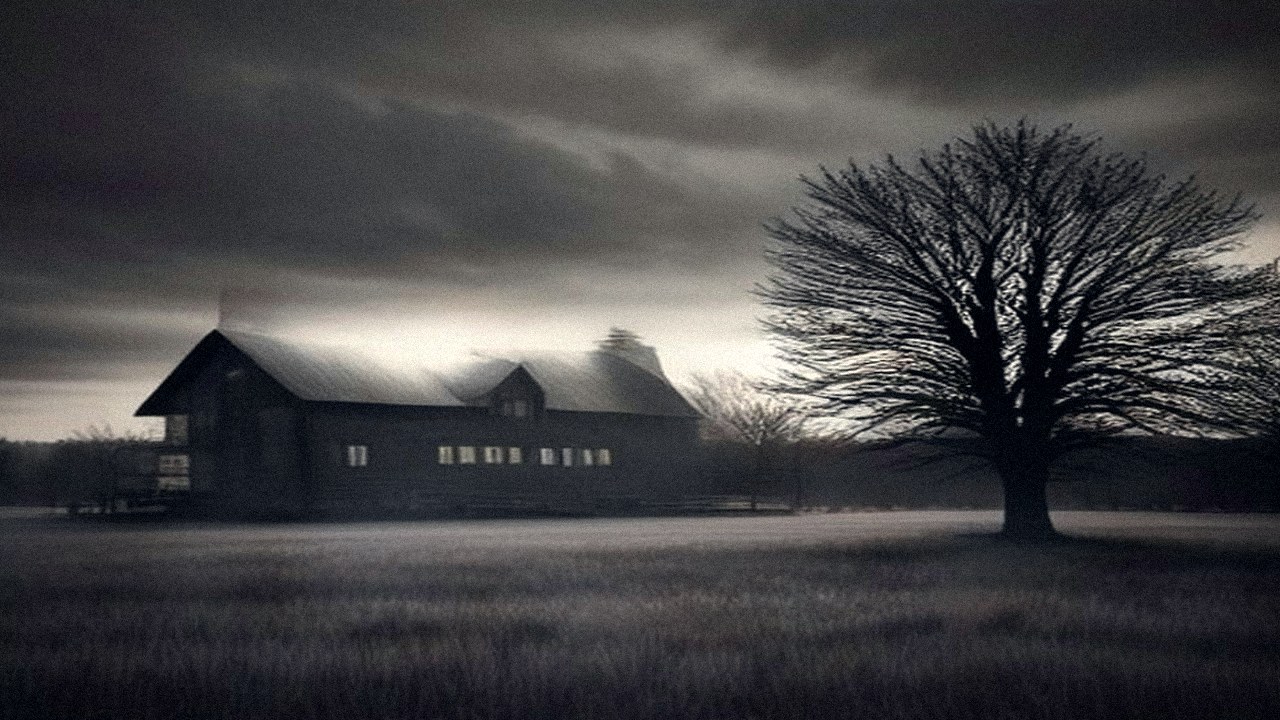
On a frontier farm in 1817, something began knocking on the walls. Within a few years it was talking, singing and making threats, and the family never learned what it was.
There is a stretch of country along the Red River in northern Tennessee where the land rolls gently down to the water, and the bluffs are cut with limestone caves. By day it is farmland, quiet and green. After dark, with the fields black and the trees standing close along the river, it is easy to understand why people here still lower their voices when they talk about the Bell farm.
Most poltergeist cases are remembered for what moved. The Bell Witch haunting is remembered for what spoke. Over roughly four years, a family of settlers reported an unseen presence that started with scratches and knocks and grew into a voice: a voice that held conversations with visitors, sang hymns, recited sermons, mocked the family’s enemies and, by the family’s own account, swore it would see the father dead.
The Setting: A Tennessee Frontier Farm on the Red River
The Bell family came to Tennessee from North Carolina in the early years of the nineteenth century and settled in Robertson County, near the settlement that later grew into the small town of Adams. It was a working farm in a young state: log buildings, cleared fields, a large household and neighbours a ride away through the woods. The family were respected churchgoers, and the people who later vouched for the haunting were farmers with reputations to protect.
The First Signs: Something in the Cornfield
The traditional account begins in 1817 with the father walking his fields and seeing an animal he could not name, sitting among the rows of corn. In the version passed down through the family, it had the body of a large dog and a head that looked wrong for it. He fired at it, and it was simply gone.
Other members of the household reported their own encounters around the same time: a strange bird on a fence, a dark shape that seemed to follow one of the children down a lane, a figure glimpsed and then lost among the trees. None of it seemed connected at first. Then the sounds started inside the house.
The Reported Phenomena
The phenomena below are told as the family and their visitors reported them. Some have rough parallels in other famous cases, such as the knocking haunting of the Drummer of Tedworth; several do not.
Knocking and scratching. It began at night as rapping on the outside walls and doors, then moved indoors: scratching on bedposts, a gnawing sound like a rat working at the wood, and the sense that something was circling the beds in the dark. Searches with candles turned up nothing.
Bedclothes pulled away. The children reported their covers dragged slowly off the bed by an unseen hand, sometimes in a slow tug-of-war that the child lost.
Unseen sounds of animals and chains. The household described the noise of dogs fighting in the house when no dogs were inside, of chains being dragged across the floor, and of stones dropping on the roof.
Blows and slaps. The youngest daughter became the main target of physical attacks. Witnesses described her being slapped hard enough to leave her cheek reddened, her hair being pulled, and pinches that left marks. Visitors sitting with her at night sometimes said they heard the slap before they saw her flinch.
The voice. This is the phenomenon that set the case apart. The sounds turned first into faint whistling, then into whispering, and then, as the family told it, into a clear voice that answered questions and joined in conversation. It gave different accounts of what it was. At one point it said it was a spirit disturbed from its rest; at another it claimed to be the witch of a woman in the neighbourhood, and the family began to call the presence “Kate”. The name stuck, and so did the word “witch”.
Sermons and hymns. Among the strangest reports is that the voice could repeat sermons preached the same Sunday at two different churches some distance apart, word for word, in the manner of each preacher. Others said it sang hymns, sometimes beautifully, especially to the mother of the family, toward whom it was said to show real tenderness.
Gifts from nowhere. When the mother fell ill, the voice was said to sing to her and to offer her fruit and nuts, which visitors claimed dropped into the room from the air.
Who Investigated, and How
There were no instruments on the Red River in 1817, only people. At first the family kept the disturbances to themselves. When the father finally confided in a trusted neighbour, that man and his wife stayed the night to see for themselves and, according to the family account, left convinced. After that, word spread.
Neighbours organised watches, sitting up in the house through the night with lamps and candles. Church members came to pray over the household. Visitors questioned the voice directly, testing it with questions about things it could not have known. Some arrived boasting that they would expose a trick and, by the stories told afterwards, left shaken, sometimes after being slapped or ridiculed by the voice in front of everyone.
The youngest daughter was sent to stay with neighbours at one stage, to see whether the phenomena would follow her. Accounts say the disturbances came along, which is one reason later writers focused so heavily on her. Others noted that the voice spoke at times when she was in plain sight and silent, which is one reason they never quite settled on her as the cause. Six decades later and far to the north, the Great Amherst Mystery in Nova Scotia would raise the same question about another nineteenth-century North American poltergeist centred on a young woman.
The case also gathered legends. The best known has a famous general and his party travelling to the farm, their wagon stopping dead on a level road until a voice spoke from the trees. No record from the time confirms it, and historians treat it as later tradition.
The Evidence We Have
As a case file, the Bell Witch is frustrating, and it is worth being honest about why. There are no contemporary investigators’ notes, no letters written during the outbreak that have come down to us in full, and no physical evidence beyond the land itself.
The core of the record is a family memoir written in the 1840s by one of the sons, who had been a boy during the haunting. It was later published, together with other recollections from local families, in a history of the case compiled in the 1890s by a local newspaperman. Everything else, the oral tradition, the county stories, and the accounts that have been printed and reprinted since, builds on those sources.
That gap of decades between event and record is the point sceptics return to, and it is a fair one to keep in mind. Readers who like their American case files built on testimony should also look at the Greenbrier Ghost. But it cuts both ways. A memoir written by a grown man about the worst years of his family’s life, published when many of the neighbours named in it still had living children nearby, was not written in a vacuum.
The Death of the Father
The darkest chapter of the case belongs to the father. From around 1819, he suffered from a strange affliction: his tongue was said to swell until he could hardly eat or speak, and his face was seized by twitching he could not control. Through it all, the voice was heard cursing him and promising that it would torment him to the end.
He died in December 1820. The family account says a small vial of dark liquid was found in a cabinet where no one remembered putting it, and that the voice claimed responsibility. The memoir says the voice was heard again at the burial, singing, as the family walked away from the grave.
No one has ever been able to say what killed him. Illness is the obvious answer, and it may be the right one. But to the people standing at that graveside, the voice they heard was not an illness.
What Remains Unexplained
Strip away the legends that grew later and a hard core of the case still stands without a clean answer.
- The voice itself. Many people over a period of years reported holding conversations with something they could not see, in a house they had searched. The suggestion that a family member was throwing their voice has been made, but it struggles with reports of the voice speaking while every family member was watched.
- Knowledge it should not have had. The repeated sermons, and the stories of the voice reporting events happening elsewhere, are among the most consistent elements in the testimony.
- Its two faces. The presence was said to be cruel to the father and the youngest daughter, and gentle with the mother. Hoaxes tend to be broad. This was oddly personal.
- The broken engagement. The youngest daughter was engaged to a young man from the neighbourhood, and the voice was said to plead with her again and again not to marry him. In the end she broke it off. Why a spirit would care about a courtship has never been answered.
- The promise to return. In 1821 the voice reportedly said goodbye and promised to come back in seven years. Family tradition holds that it did, in 1828, visiting one of the sons for a short time before announcing it would return far in the future.
Theories have come and gone, from family secrets to neighbourhood feuds to the youngest daughter as the unwitting centre of a poltergeist outbreak, much like the young people at the heart of the Enfield Poltergeist and the Rosenheim poltergeist. None of them covers everything the witnesses described, and none of them has ever silenced Robertson County.
The Bell Witch Cave on the Bluff
Below the old farmland, a cave opens in the bluff above the river, and local tradition has tied it to the Bell Witch for generations. Visitors and guides have reported voices and footsteps, shapes at the edge of torchlight, and cameras and phones that fail inside. Whether the presence ever truly left the farm is a question many who have stood in that cave are not willing to answer with confidence.
Lessons for Investigators
The Bell Witch is a case worth studying even though no one can examine it first-hand any more.
- Write it down at the time. The single greatest weakness of this case is that the main account was written decades later. A dated, signed log made during the event is worth more than any number of later recollections.
- Record who was where. Many questions about the voice could have been settled by a simple note of where each person was standing when it spoke.
- Treat voice phenomena with care. Voices and replies sit at the centre of cases from this Tennessee farm to an EVP session in the dark. Capture the raw audio, note the time, and do not prompt witnesses with what you expect them to have heard.
- Respect the family and the land. The Bell farm was a home, then a grave, and the area is still lived in. Ask permission, stay off private land, and visit the cave only through those who look after it.
- Read the old records side by side. Cases with surviving letters, like the Epworth Rectory haunting, show how much a contemporary written record can tell us, and how much the Bell case lost by not having one.
A Case That Never Closed
The Bell Witch is often told as entertainment now, around campfires and on autumn nights. But at its heart is a family who lived through four years of something they could not explain, buried their father in the middle of it, and spent the rest of their lives telling the same story. They never claimed to understand it. They only claimed it happened.
Somewhere along the Red River, the fields still go dark at night, the cave still breathes cold air into the bluff, and the question the Bell family asked in 1817 has never been answered: what was it that learned their names, and spoke?
Leave a Reply